









Goods and packing for LCL shipping require specific standards and handling methods to protect diverse cargo categories during domestic and international transit. Shippers move six main types of freight using shared container methods, such as consumer goods, industrial goods, commercial merchandise, hazardous materials, perishable goods, and high-value items. Not every shipment qualifies for transport. Certain prohibited items face strict exclusions under domestic and international shipping regulations, while others require special restricted status.
The goods and packing guide for LCL shipping explains how to check if your goods fit LCL based on volume, weight, fragility, and shipment value, then shows how to pack them properly and avoid the most common packing mistakes shippers make in shared containers.
Ship with Confidence Using Deliveree
Deliveree acts as Indonesia’s digital freight forwarder, offering door-to-door and port-to-door LCL delivery from Jakarta and Surabaya to all major domestic ports through a strategic partnership with Salam Pacific Indonesia Lines (SPIL). Every booking includes real-time cargo tracking, 24/7 live customer support, and insurance coverage from pickup to final delivery.
Understanding LCL Shipping
Less than Container Load (LCL) shipping is a sea freight method where cargo from multiple shippers travels in one shared container, and each shipper pays only for the space in cubic meters (CBM) or the gross weight their goods occupy, whichever results in the higher charge. For most shipments below roughly 14 to 18 CBM, sharing container space through LCL usually costs less than booking a full container (FCL). Once cargo volumes rise above that range, FCL often becomes more cost-efficient for exporters and importers.
What Does LCL Shipping Mean?
LCL shipping means a freight forwarder consolidates cargo from several shippers into a single container, and arranges the full journey from consolidation to final delivery while each shipper only pays for their share of space or weight. Forwarders must follow international safety and documentation rules, so they rely on accurate cargo details from shippers for container weight and contents. LCL shipping has six defining characteristics that set it apart from FCL shipping as a logistics method.
- Cargo Consolidation: The forwarder collects goods from multiple shippers, brings them to a warehouse, and loads them together into one container before departure.
- CBM-Based Pricing: Each shipper pays based on the chargeable volume in CBM or gross weight, using whichever figure produces the higher billable amount.
- Shared Container Space: One container carries goods from two or more unrelated shippers, with each shipment kept separated and clearly labeled throughout transit.
- Independent Bill of Lading: Every shipper receives a separate bill of lading that serves as proof of ownership and the individual shipping contract for their cargo.
- Cargo Deconsolidation: At the destination port, the forwarder or their partner unloads the container, separates each shipper’s goods, and prepares them for release or onward delivery.
- Freight Forwarder Coordination: A licensed forwarder manages consolidation, customs documentation, deconsolidation, and last-mile delivery so shippers don’t need to handle each step with the shipping line directly.
Shippers who understand how LCL shipping works at each stage make better decisions about routing, packing, and documentation before their cargo reaches the port.
When Should You Use LCL Shipping?
Use LCL shipping when your cargo volume is below 15 CBM and and the total shipment weight stays under about 10 metric tons per booking, which fits common LCL practice on Indonesia’s main trade lanes. In that range, paying for shared container space often saves a significant amount compared to booking a full container once you include origin and destination charges. For many Indonesian routes, shipments under about 12 CBM are clear LCL candidates, while shipments between roughly 12 and 18 CBM require a direct quote comparison with FCL before you decide. LCL fits businesses that ship often in smaller quantities instead of waiting to fill a full 20-foot container. The pattern keeps outbound volumes closer to sales cycles, reduces overstocking, and avoids tying up cash in large production runs that sit in a warehouse while you wait to reach full-container volume. LCL is usually not the right choice for larger volumes that consistently approach full-container size, highly fragile cargo that cannot tolerate shared handling, or shipments that need the fastest possible port-to-port transit that direct FCL services provide.
.
What are the Types of Goods Suitable for LCL Shipment?
Six main goods categories are suitable for LCL shipment. The categories are consumer goods, industrial goods, commercial merchandise, hazardous materials, perishable goods, and high‑value items. In general, suitable LCL cargo fits into standard, stackable packaging, stays within a 20‑foot container’s usable space and weight limits, and can tolerate the extra handling that comes with consolidation, sea transit, and deconsolidation.
- Consumer Goods: Everyday retail and household products that pack into standard cartons and palletize cleanly.
- Industrial Goods: Machinery parts and equipment components that need stronger crates or heavy‑duty pallets for safe handling.
- Commercial Merchandise: Manufacturing inputs and raw materials that move regularly between suppliers and production facilities.
- Hazardous Materials: Regulated dangerous goods that only qualify for LCL under strict IMDG packaging and documentation rules.
- Perishable Goods: Temperature‑sensitive cargo that can only move in compatible reefer LCL consolidations when accepted.
- High‑Value Items: Electronics, precision instruments, and branded goods that require secure packing and appropriate insurance.
Each goods type carries specific packing, documentation, and handling requirements that determine whether it qualifies for standard LCL consolidation or requires a specialized LCL service.
How are goods generally classified for LCL shipping?
Freight forwarders classify goods for LCL shipping using four criteria. The classifications are cargo type, handling requirements, special regulatory status, and volume-to-weight ratio. Each classification criterion determines which documentation the shipper must prepare, how the freight forwarder packages and stows the cargo within the shared container, and whether any extra surcharges or restrictions apply. In practice, most LCL goods fall into six categories, and each one is either fully accepted under standard consolidation terms or accepted only when certain conditions and approvals are met.
| Goods Classification | Typical Product Examples | Typical Volume Range | Special Requirements | LCL Acceptance Status |
| Consumer Goods | Clothing, footwear, homeware, packaged food, toys, beauty products, pet supplies | 1 to 15 CBM | Standard carton and pallet packing, commercial invoice and packing list | Fully accepted, standard consolidation |
| Industrial Goods | Spare parts, motors, bearings, tools, valves, pumps, power transmission components | 1 to 14 CBM | Wooden crating or heavy-duty pallets, may require equipment certificates | Fully accepted, standard consolidation |
| Commercial Merchandise | Raw materials, packaging inputs, textile trims, plastic resins, rubber sheets | 1 to 12 CBM | Standard bagging or boxing, country-of-origin certificate required | Fully accepted, standard consolidation |
| Hazardous Materials | Paints, solvents, adhesives, limited-quantity flammable liquids, aerosols | 1 to 5 CBM per IMDG limits | MSDS, IMDG-compliant labeling, Dangerous Goods (DG) declaration, International Maritime Organization (IMO) surcharge | Conditionally accepted, limited HAZMAT only |
| Perishable Goods | Pharmaceuticals, fresh produce, frozen foods, temperature-sensitive goods | 1 to 10 CBM | Reefer LCL container, cold-chain documentation, compatible co-cargo required | Conditionally accepted, reefer LCL only |
| High-Value Items | Electronics, precision instruments, branded goods, collectibles | 1 to 10 CBM | Declared customs value, marine cargo insurance, tamper-evident packaging | Conditionally accepted, insurance mandatory |
Goods that don’t fit any of these categories, or that fall outside a provider’s limits for packaging, documentation, risk level, or volume, may be declined for standard LCL consolidation and redirected to FCL, reefer, dangerous‑goods, or other specialized freight services instead.
1. Consumer Goods 📦
Consumer goods form the broadest LCL shipment category by product variety and include everyday retail and household products that pack neatly into standard cartons without needing special dangerous‑goods approvals. Most consumer goods that move by LCL fit into sturdy corrugated cartons, stack safely on pallets that meet export requirements, and carry no IMDG dangerous‑goods classification.
| Goods Type | Description | Handling Requirements | Example Items |
| Packaged Retail Products | Mass-market goods sold directly to end consumers via retail or e-commerce channels | Strong corrugated cartons, reasonable per‑carton weight for manual handling, standard pallet footprint that stacks safely in containers | Clothing, footwear, homeware accessories, packaged food |
| Beauty and Personal Care | Cosmetic, grooming, and hygiene products in sealed bottles, tubes, or rigid containers | Inner cushioning such as bubble wrap where needed, clear product labels and HS codes on documentation and outer cartons | Skincare, haircare, cosmetics, personal hygiene items |
| Toys and Sporting Goods | Recreational and leisure products packaged in retail-ready display boxes | Foam‑padded or reinforced cartons for delicate parts, Fragile or This Side Up labels for items with breakable or upright components | Toys, board games, bicycles (disassembled), sporting equipment |
| Pet Supplies | Non-perishable animal care products in sealed bags, pouches, or rigid containers | Standard cartonization, accurate weight and item counts per carton on the packing list | Pet food (dry), accessories, grooming tools, feeding equipment |
Shippers should attach durable, water‑resistant labels on at least two sides of every carton, matching the commercial invoice and packing list, so consumer goods clear customs smoothly and are not delayed at the destination port.
2. Industrial Goods ⚙️
Industrial goods cover components, equipment parts, and machinery accessories that require stronger, more protective packaging than standard consumer products. Industrial goods shipments carry equipment certificates alongside standard commercial documentation when machinery or power transmission assemblies are included. For LCL shipping, industrial goods typically move in wooden crates or on heavy‑duty pallets that can safely support concentrated weights and withstand repeated handling at warehouses and ports.
| Goods Type | Description | Handling Requirements | Example Items |
| Machinery Components | Mechanical parts and assemblies for industrial equipment requiring corrosion protection during transit | Wooden crates with foam padding, Vapor Corrosion Inhibitor (VCI) wrap, Heavy handling labels | Motors, gearboxes, pumps, hydraulic cylinders |
| Spare Parts and Tools | Replacement components and precision tooling packed to prevent movement and contact damage | Rigid foam-lined cartons, individual part wrapping in VCI poly bags, parts list attached inside crate | Bearings, valves, cutting tools, drill bits, fasteners |
| Electrical Components | Electronic industrial equipment requiring electrostatic discharge (ESD) protection in transit | Anti-static bubble wrap, ESD shielding bags, Fragile and Handle with Care labels | Control panels, switchgear, sensors, industrial drives |
| Power Transmission Parts | Heavy-duty components for power and motion control systems with precise dimensional requirements | Heat-treated ISPM-15 timber crating, internal dunnage, weight declared on crate exterior | Belts, chains, pulleys, sprockets, couplings |
Every export crate should carry a valid ISPM‑15 heat‑treatment mark and clear weight and consignee details so destination customs do not hold or refuse industrial goods because of non‑compliant timber packaging.
3. Commercial Merchandise 🏪
Commercial merchandise covers manufacturing inputs and raw material shipments that move regularly between suppliers and production facilities. Commercial merchandise is a high-frequency LCL goods type with predictable volume cycles and consistent documentation requirements. For LCL shipping, commercial merchandise typically needs clear product descriptions, correct HS codes, and supporting origin information so customs can apply the right duties and any trade preferences based on where the goods were made.
| Goods Type | Description | Handling Requirements | Example Items |
| Textile Raw Materials | Fabric rolls, yarn, and fiber inputs for garment and textile manufacturing | Moisture-resistant polyethylene sleeve wrap, standing-upright stowage for rolls, weight per roll on label | Woven fabric, knit fabric, yarn cones, fiber bales |
| Packaging Inputs | Cartons, films, labels, and packaging components used in production lines | Standard corrugated cartons on export‑compliant pallets, stretch or shrink wrap to stabilize loads, protection from moisture and crushing | Printed labels, flexible packaging film, rigid trays, carton blanks |
| Plastic Resins and Rubber | Granule or sheet-form polymer inputs for molding and manufacturing processes | Industrial bulk bags (FIBC) or double-lined cartons, moisture-seal inner lining, Keep Dry label | Polyethylene (PE) and polypropylene (PP) pellets, rubber sheets, synthetic rubber compounds |
| Chemical Inputs (Non-DG) | Non-hazardous specialty chemicals and additives used in production or processing | Sealed industrial drums or cartons, inner PE liner, HS code and MSDS provided for non-DG items | Dyes, surfactants, food-grade additives, cleaning compounds |
Shippers should mark outer packaging with the correct country of origin and ensure each product type has a clear HS code on the packing list so customs can classify commercial merchandise correctly and avoid tariff disputes or holds.
4. Hazardous Materials ⚠️
Hazardous materials in LCL shipping are goods classified under the IMDG Code, which sets the safety rules for moving dangerous goods by sea. The hazardous materials shipments face stricter acceptance rules than standard cargo and only certain lower‑risk hazardous goods can move by LCL, usually when they use approved packaging, have complete documentation, and the carrier agrees to take them in a shared container.
| Goods Type | Description | Handling Requirements | Example Items |
| Class 3 Flammable Liquids | Flammable liquids with flashpoints below 60°C, the most frequently booked HAZMAT class in LCL consolidation across Southeast Asian freight forwarders | UN-certified containers (UN4G/UN4GX), absorbent inner lining, Class 3 red diamond placard, DGN required | Paints, varnishes, adhesives, cleaning solvents, alcohols |
| Class 8 Corrosive Substances | Acidic or alkaline liquids and solids that cause tissue damage or corrode metals on contact | Double inner containment, acid-resistant cartons, Class 8 black-and-white diamond placard, max 25 kg per carton | Battery acid, caustic soda, industrial cleaning acids |
| Class 9 Miscellaneous DG | Goods posing transport hazards not covered by Classes 1 through 8, including lithium batteries | UN-certified packaging per battery type, lithium battery label (UN3481/UN3091), IMDG Amendment 42-24 compliant | Lithium-ion batteries, magnetized material, dry ice |
| Limited Quantities (LQ) | HAZMAT goods packaged in small quantities that qualify for reduced IMDG documentation requirements | Inner packaging within outer carton meeting LQ volume limits, LQ mark on carton exterior | Small aerosol cans, limited-volume flammable liquids, household chemicals |
For LCL, consolidators accept only limited, lower‑risk hazardous materials and must stow them away from incompatible cargo, so shippers need to confirm acceptance and IMDG requirements with their freight forwarder before booking.
5. Perishable Goods ❄️
Perishable goods are temperature‑sensitive cargo that can spoil or lose quality if they leave a defined temperature range during storage and transport. Only certain perishables move by sea in shared containers, usually through specialized reefer LCL services where all cargo in the container can accept the same temperature setting. Before confirming any perishable booking, freight forwarders need to check whether the product is allowed, which reefer settings are available on the route, and whether other cargo in the consolidation can share that setting safely.
| Goods Type | Description | Handling Requirements | Example Items |
| Fresh Produce | Agricultural goods with active biological processes requiring continuous cold chain management from farm to destination | EPS (expanded polystyrene) or corrugated insulated boxes, ice pack or gel pack lining, Keep Cold label, 0°C to +10°C reefer range | Fresh fruits, vegetables, cut flowers, chilled seafood |
| Frozen Foods | Processed or raw food products requiring sustained sub-zero temperatures to prevent spoilage | Polyurethane-insulated cartons, moisture-barrier inner liner, sealed to prevent condensation, -18°C reefer setting | Frozen meat, frozen seafood, ice cream, frozen ready meals |
| Pharmaceuticals | Medical and healthcare products with documented temperature sensitivity affecting efficacy and patient safety | Good Distribution Practice (GDP)-compliant cold-chain packaging, temperature data logger inside each pallet, +2°C to +8°C reefer setting | Vaccines, biologics, temperature-sensitive medicines, diagnostics |
| Temperature-Sensitive Chemicals | Industrial or specialty chemicals that degrade, crystallize, or become hazardous outside a defined temperature range | Insulated cartons with temperature indicator labels, shade stowage instructions, temperature range marked on outer packaging | Photographic chemicals, enzyme solutions, specialty adhesives |
Most Indonesian shippers with temperature‑sensitive cargo use dedicated cold‑chain or reefer LCL services, so they must confirm in advance whether a specific perishable product is accepted and what packaging, temperature, and documents are required for the route.
6. High-Value Items 💎
High‑value items in LCL shipping are goods with higher declared customs values where shippers and forwarders pay extra attention to packaging, security, and insurance. Many forwarders strongly recommend or require cargo insurance for these shipments and may stow them in clearly marked, sealed cartons or pallets so they are easier to track and inspect during consolidation and deconsolidation. Shippers should always declare a realistic commercial value on the invoice and coordinate insurance coverage before booking, because under‑declaring value can limit or jeopardize any claim if goods are lost or damaged in transit.
| Goods Type | Description | Handling Requirements | Example Items |
| Consumer Electronics | High-demand electronic devices with precise component tolerances sensitive to shock, static, and humidity | Anti-static bubble wrap, ESD shielding bags, foam-fitted cartons, Fragile and This Side Up labels, humidity absorber sachet | Smartphones, laptops, tablets, cameras, audio equipment |
| Precision Instruments | Measurement, testing, and calibration instruments whose calibration certificates are invalidated by physical damage | Custom foam-cut cases, individual unit protective bags, Handle with Extreme Care label, calibration certificate packed inside | Laboratory instruments, optical equipment, survey tools |
| Branded and Luxury Goods | High-margin branded merchandise where product authenticity and presentation condition directly affect resale value | Sealed tamper-evident cartons, brand-approved packaging standards, barcode and anti-counterfeit label per unit | Designer apparel, luxury accessories, branded cosmetics, watches |
| Fine Art and Collectibles | Unique or limited-edition items whose value depends entirely on condition and provenance integrity | Custom-built wooden crates with acid-free tissue and foam padding, humidity-control silica gel packs, Do Not Stack label, insurance certificate accompanies shipment | Paintings, sculptures, limited-edition prints, numismatic collections |
For high‑value LCL shipments, shippers should document goods with photos and serial or seal numbers and align declared value with their insurance coverage so they can support any future damage or loss claim.
What are the Restricted or Special Goods in LCL Shipping
Restricted and special goods in LCL shipping are cargo types that face strict limits, extra approvals, or full bans when forwarders decide whether to load them into shared containers. Most LCL providers follow the IMDG Code for dangerous goods, then add national law and their own risk policies, so some cargo can never move in LCL, some needs special permits, and some is only accepted under narrow conditions. The main restricted groups in this guide are corrosive materials, explosive materials, radioactive materials, weapons and ammunition, living beings, and illegal goods.
Deliveree Prohibited Items Policy
For LCL shipping and other services, Deliveree does not accept illegal goods prohibited under Indonesian law, weapons and ammunition, radioactive materials, or dangerous and highly flammable substances such as corrosive liquids and toxic chemicals that fall under Indonesia’s hazardous and toxic material regulations. Shipments that violate these rules can be refused or reported to the authorities, and any costs or penalties remain the shipper’s responsibility.
1. Corrosive Materials
Corrosive materials are IMDG Class 8 substances that can burn skin or corrode metal surfaces when they leak or spill. In LCL shipping, many carriers treat these products as a restricted category, and only accept certain Class 8 items when they are packed in approved, leak‑tight packaging, properly labeled with hazard marks, and accompanied by complete dangerous‑goods documentation.
🚫 Corrosive Materials Shipping Compliance⚠️
Consolidators refuse corrosive materials packaged in non‑UN‑certified containers, including standard plastic drums and unmarked jerry cans. Battery acid, caustic soda solution, and hydrochloric acid require Class 8 black‑and‑white diamond placards on at least two sides of every pallet, and shippers are liable for any spill or leak inside a shared container.
2. Explosive Materials
Explosive materials are IMDG Class 1 substances and articles that can explode if triggered by heat, shock, or friction. Shared‑container LCL is not designed to handle this level of risk, so LCL consolidators treat Class 1 goods as completely banned from standard LCL services.
🚫Explosive Materials Shipping Compliance 💥
Consolidators refuse Class 1 explosives and pyrotechnic articles in all LCL bookings without exception. Shippers who misdeclare explosive materials as general merchandise can face criminal charges under Indonesian law and assume full liability for container removal, inspection costs, and vessel delay penalties. Fireworks and ammunition are two of the most common misdeclared explosive categories identified at Indonesian port X‑ray inspections.
3. Radioactive Materials
Radioactive materials are IMDG Class 7 substances that emit ionizing radiation and are not suitable for LCL shared‑container consolidation. Consolidation warehouses and standard containers are not designed to control radiation exposure for co‑loaded cargo, equipment, or staff, so radioactive goods must move via specialized, licensed services instead of LCL.
🚫Radioactive Materials Shipping Compliance☢️
Consolidators refuse radioactive materials in any form or quantity at all LCL facilities, and Deliveree explicitly prohibits radioactive items across all service categories. Shippers who attempt to move radioactive materials via LCL without disclosure violate Indonesian regulations and can face both criminal prosecution and civil liability for radiation contamination.
4. Weapons and Ammunition
Weapons and ammunition are absolutely prohibited in LCL shipping unless the shipper holds a valid government‑issued import or export permit specific to each item in the consignment, but many consolidators choose not to carry these goods at all. In this guide, weapons and ammunition include firearms, weapon components, combat knives, and any device designed to cause physical harm, whether functional, deactivated, or replica.
🚫Weapons and Ammunition Shipping Compliance🔫
Deliveree’s prohibited items policy covers all firearms, ammunition, weapon parts, and explosive materials regardless of permit status. In Indonesia, the unauthorized transport of weapons and ammunition can carry severe criminal penalties, and carriers that discover undeclared weapons in LCL containers must report the shipment to Customs and Excise and the national police.
5. Living Beings
Living beings such as live animals and live plants cannot move in standard LCL dry containers because shared containers expose cargo to uncontrolled temperature, ventilation, and handling conditions that are unsafe for biological cargo. Most LCL consolidators therefore treat live animals, insects, and live plants as prohibited cargo for dry‑container LCL services.
🚫Compliance Warning: Living Beings🐾
Deliveree does not accept live animals, live plants, or other living beings in standard LCL, and shippers who need to transport such cargo must use licensed, specialized carriers that are equipped to manage animal welfare and phytosanitary controls.
6. Illegal Goods
Illegal goods in LCL shipping are any items that are banned under Indonesian law or the destination country’s law, including narcotics, psychotropic substances, unlicensed pharmaceuticals, counterfeit products, and goods linked to money laundering or terrorism financing. The illegal goods are categorically prohibited from LCL services, regardless of packaging, documentation, or declared value.
🚫Compliance Warning: Illegal Goods 🚫
Deliveree does not accept any illegal goods and cooperates with law‑enforcement agencies when shippers attempt to move prohibited cargo, including counterfeit branded products or unregistered medicines. Shippers are fully responsible for any criminal or civil consequences that follow from attempting to ship illegal goods via LCL services.
.
How to Identify Suitable Goods for LCL Shipment?
Goods are suitable for LCL shipment when they fit within realistic volume and weight limits, can tolerate shared‑container handling, and face no outright bans under dangerous‑goods or customs rules. In practice, many shippers treat cargo in roughly the 1 to 15 CBM band, with individual items under a few tonnes and within standard container door dimensions, as the main candidates for LCL instead of booking a full container. Suitable LCL cargo is usually durable, compact, non‑perishable, and easy to pack into stackable cartons, crates, or pallets, while very bulky, extremely fragile, highly perishable, or legally restricted cargo is more likely to move as FCL or via specialized services.
Factors That Determine LCL Suitability
Three factors determine whether goods qualify for LCL shipment. The three factors are volume and weight measurements, fragility and handling requirements, and shipment value and insurance.
- Volume and Weight: LCL works best when total shipment volume sits in the small‑to‑medium range and each piece is light and compact enough for safe lifting, stacking, and stowage inside a shared container. Forwarders calculate chargeable weight based on the higher of actual gross weight or volumetric weight in CBM, so shippers should measure both to understand how their LCL cost will be billed.
- Fragility and Handling Requirements: LCL shipments pass through more handling points than FCL because cargo is loaded, sorted, and unloaded alongside other shippers’ goods before and after the sea voyage. Products that cannot tolerate repeated lifting, stacking, or vibration without damage either need stronger packaging for LCL or should move as FCL or through a more controlled, specialized service.
- Shipment Value and Insurance: Higher‑value goods usually face stricter insurance and security expectations in shared containers. If the declared value is high relative to the carrier’s liability limits or the cargo type is often excluded from standard LCL coverage, shippers may need separate marine cargo insurance or a switch to FCL or specialist services even when the volume fits the normal LCL range.
When cargo clears the three checks in terms of size, robustness, and value‑to‑risk balance, it usually qualifies for standard LCL booking. Otherwise, shippers should either adjust packing, arrange extra insurance, or consider FCL or specialized options before confirming a shipment.
Volume and Weight Considerations
Volume and weight form the first suitability check for any LCL booking. LCL freight pricing follows the W/M (weight or measurement) rule, which charges the shipment based on whichever is greater between the total volume in CBM and the total gross weight in metric tons (MT), using a standard conversion of 1 CBM to 1 MT for billing.
In practice, the charges rule means that light but bulky shipments pay on volume, while dense, compact shipments pay on weight. Consolidation warehouses re‑measure all incoming cargo with their own scales and dimensioning tools and will update the chargeable weight if they find that the declared figures are understated.
How the W/M Rule Works in Practice
| Shipment A: Clothing | Shipment B: Steel Parts | |
| Carton Dimensions | 1.0 m × 0.8 m × 0.6 m | 0.5 m × 0.4 m × 0.3 m |
| Volume | 0.48 CBM | 0.06 CBM |
| Actual Weight | 0.12 MT | 0.80 MT |
| Which Is Greater? | Volume (0.48 > 0.12) | Weight (0.80 > 0.06) |
| Chargeable Unit = max (Total CBM, Total Weight in MT) | 0.48 CBM | 0.80 MT |
| Why | Light goods take up more space | Dense goods weigh more than their size |
Shippers should measure every carton and pallet carefully before booking, declare realistic figures, and expect the warehouse to use its own measurements on the final invoice if there is a difference.
Volume and Weight Labeling Tip
Mark the gross weight in kilograms on the outside of each carton and, if available, include the CBM per carton on a durable label placed on a visible face of the box. Clear, accurate labels help warehouse staff verify your declared data quickly and reduce the chance of extra handling or measurement charges at intake.
Fragility and Handling Requirements
Protecting fragile items in LCL shipping means applying layered packaging around every breakable, impact‑sensitive, or vibration‑sensitive item so that it never touches a rigid surface and cannot move inside its carton under normal handling or transit forces.
| Aspect | LCL shipment | FCL shipment |
| Packing | Shipper packs cartons or pallets | Shipper packs and seals own container |
| Warehouse handling | Cargo received, sorted, and loaded with other shippers’ goods | Container loaded as a single unit |
| At sea | Container travels sealed, but carton‑level cargo may shift inside | Container travels sealed with shipper’s own load plan |
| At destination | Container is opened, cargo is unstowed and sorted by consignee, then delivered | Container is delivered and opened by consignee |
| Typical touchpoints | Multiple carton or pallet handling steps | Minimal handling between origin stuffing and destination unstuffing |
Goods packed in strong, double‑wall cartons on stable pallets usually withstand this handling pattern and qualify for standard LCL, while very fragile items that need precise vibration isolation or cannot be stacked safely often require custom crating or a switch to FCL or specialist services. Consolidators may refuse fragile cargo presented in weak cartons, loose retail boxes, or without pallet bases, or accept it only after the shipper upgrades the packaging and accepts that any damage linked to inadequate packing remains their responsibility.
Fragile Goods Labeling Tip
Apply Fragile labels on all four vertical faces of each carton with breakable goods and add This Side Up and Do Not Stack labels or a safe stacking limit so warehouse staff can plan stowage and reduce compression damage.
Shipment Value and Insurance
Shipment value is the third factor to consider when deciding whether to use LCL, because shared containers introduce more handling steps and longer routing than some direct FCL services, which can increase exposure to damage, delay, or co‑cargo issues for higher‑value goods. Marine cargo insurance for LCL usually sets the insured amount at or above the shipment’s CIF value and applies a percentage rate to calculate the premium, with higher‑risk or higher‑value cargo paying more than standard durable goods. If a shipper declares a customs value lower than the true commercial value, insurers typically limit any payout to the declared amount or reduce claims in proportion to the under‑declaration, leaving the shipper to absorb any difference in a total‑loss scenario.
LCL Insurance Declaration Tip
Declare a realistic commercial value for your LCL cargo on both the invoice and the insurance policy, and keep invoices, packing lists, and pre‑shipment photos, because insurers usually ask for this evidence when they assess LCL damage or loss claims.
Are There Any Goods Prohibited from Being Shipped Using LCL Services?
Yes, some goods are completely prohibited for LCL and either cannot move by shared container at all or must use very specialized services instead. In shared containers, a single prohibited item can expose all other shipments in the same box to contamination, seizure, or destruction, so LCL consolidators apply stricter bans than FCL on dangerous, live, illegal, or high‑risk items. In broad terms, LCL providers do not accept explosives (IMDG Class 1), radioactive materials (Class 7), certain high‑risk infectious substances (Class 6.2), or oversized cargo that cannot physically fit inside a standard container, and many also restrict or ban live animals and plants, narcotics, and weapons regardless of packaging or documentation.
What Items are Commonly Prohibited in LCL Shipping?
Ten items are commonly prohibited in LCL shipping across carriers and consolidators operating in Southeast Asia and globally. These prohibitions span both IMDG‑based absolute bans and carrier‑policy bans that apply independently of international law, so shippers must check both the IMDG Code and their carrier’s prohibited‑items list before submitting an LCL booking.
- IMDG Class 1 Explosives: Fireworks, detonators, and similar explosive articles that can trigger violent reactions and are treated as too dangerous for shared containers.
- IMDG Class 7 Radioactive Materials: Radioactive isotopes and radiopharmaceuticals that require dedicated, licensed transport instead of standard LCL consolidation.
- High‑risk infectious substances: Certain Category A infectious or highly contagious biological materials that could contaminate co‑loaded cargo and are normally excluded from LCL.
- Selected highly hazardous dangerous goods: Some carriers refuse or strictly limit especially hazardous Class 4 flammable solids, strong oxidizers and organic peroxides (Class 5), and higher‑risk toxic substances (Class 6.1) even when IMDG allows them, because safe segregation is hard to guarantee in groupage.
- Live animals and live plants: Livestock, pets, insects, hatching eggs, and most live potted plants, which cannot safely survive sealed‑container conditions and are handled under separate live‑cargo or quarantine rules.
- Narcotics and illegal drugs: Controlled substances that customs and law‑enforcement agencies seize on sight, with severe penalties for concealment in LCL containers.
- Weapons and unlicensed ammunition: Firearms, ammunition, and weapon parts that require specific government permits and are normally excluded from standard LCL services.
- Misdeclared hazardous goods: Dangerous goods such as lithium batteries or strong chemicals that shippers describe as “general cargo,” which carriers treat as prohibited once discovered because misdeclaration has caused serious fires and port incidents worldwide.
- Indonesia‑specific prohibited imports (Lartas): Goods such as used clothing, certain hazardous waste streams, and products containing banned refrigerants that fall under Indonesia’s import ban and restriction framework and can be blocked regardless of shipping method.
- Cargo without basic commercial documents: Consignments where the shipper cannot provide at least a commercial invoice and packing list, which many LCL providers treat as unshippable because customs cannot clear undocumented cargo.
If a shipper realizes that their goods appear on either the IMDG prohibited list or their carrier’s red‑list after booking, they should contact the freight forwarder immediately to cancel or amend the shipment before cargo reaches the consolidation warehouse, because prohibited goods are normally refused at intake and may trigger inspection, seizure, or other enforcement actions if misdeclared and discovered later in the journey.
Are International Shipping Regulations Required for LCL Shipment?
Yes, international shipping regulations are mandatory for every LCL shipment that crosses a national border. Shippers must provide accurate weight data, follow dangerous‑goods rules where relevant, and ensure that each individual consignment inside the shared container has the export and import documents required by the origin and destination countries.
- Safety and vessel rules: Containerized cargo moving by sea must comply with safety rules such as verified gross mass (VGM) and, where applicable, dangerous‑goods regulations under the IMDG Code, so shippers do their part by giving correct weights, declaring any dangerous goods honestly, and using compliant packaging and labels.
- Export and import customs: Each LCL shipment has its own export declaration at origin and its own import declaration at destination, even though the cargo shares a container, and customs use the house bill of lading, commercial invoice, and packing list for each shipper to assess duties, taxes, and any controls on the goods.
- Origin and trade preferences: When shippers want to claim reduced duty under a trade agreement, they may need a certificate of origin or other proof of where the goods were made; if they do not provide the proof, customs usually charge standard rates instead of preferential ones.
- Advance security filings: Some destinations, such as the EU and other high‑control markets, require carriers and forwarders to lodge detailed entry or security data before loading, using accurate shipper, consignee, commodity, HS code, and weight information for each LCL consignment.
Working with a licensed freight forwarder that has experience in both the origin and destination markets helps ensure these regulatory steps are handled correctly as part of a single booking flow.
Preparing Your Goods for LCL Shipment
Preparing goods for LCL shipment means checking that they fit LCL rules, getting documents in order, packing them securely, and labeling them clearly before handover to the consolidator.
- Confirm Goods Suitability and Measure Volume: Check that your cargo is not on your forwarder’s prohibited or restricted list and that it fits the typical LCL volume and weight range you use for planning. Measure every carton, calculate CBM, and total the volume so you know how much space your shipment will occupy in the shared container.
- Gather All Required Shipping Documentation: Prepare a commercial invoice and packing list with consistent shipper, consignee, product description, HS code, quantity, weight, and volume information. Add any extra documents your shipment needs, such as export declarations, certificates of origin for preferential tariffs, or safety data sheets for certain chemicals, and check that details match across the full set.
- Pack Goods into Structurally Appropriate Containers: Use strong cartons, crates, or pallets that match the weight and fragility of the goods, such as double‑wall cartons for lighter items, reinforced or crated units for heavy parts, and padded packaging for delicate products. Seal cartons securely and make sure pallets are stable so they can handle multiple lifts and stacking during consolidation and deconsolidation.
- Apply Compliant Cargo Labels on All Exposed Faces: Attach durable labels on visible sides of each carton and pallet showing at least the shipper, consignee, destination country, booking reference, and gross weight in kilograms. Add handling symbols such as Fragile, This Side Up, Do Not Stack, or Keep Dry where they apply so warehouse staff can handle and stow the cargo correctly in the shared container.
- Calculate and Declare the Verified Gross Mass (VGM): Weigh packed units, record gross weight per carton or pallet, and add them up to get the total shipment weight for your booking and VGM declaration. Provide this figure to your forwarder before the cut‑off so the container can be loaded without delays caused by missing or inaccurate weight data.
- Photograph All Packed Units Before Handover: Take clear photos of the packed and labeled cartons and pallets from several angles and keep them together with your invoice and packing list. The images act as evidence of condition and packing quality if you ever need to support a damage or loss claim for an LCL shipment.
Shippers who complete all six preparation steps before presenting cargo at the consolidation warehouse reduce intake rejection rates, avoid many customs documentation holds, and create a defensible record for any in‑transit damage or loss claim.
1. Documentation Required for LCL Shipping
Documentation for LCL shipping is the set of commercial and regulatory papers a shipper must provide so the forwarder can clear customs and book space in a shared container. Most Indonesian LCL shipments use a small core set of documents on every booking, with a few extras added only when the cargo type or trade lane demands them.
- Commercial Invoice: Records the transaction between buyer and seller, including product descriptions, HS codes, quantities, prices, total value, and Incoterms; customs at origin and destination use it to calculate duties and taxes. Indonesian shippers should include their NPWP, a clear invoice number, and the agreed Incoterms and currency so customs can link the shipment to a valid tax identity and trade contract.
- Packing List: Lists each carton or pallet with weights, dimensions, CBM, and the items inside so the forwarder can prepare the house bill of lading and customs can match documents to physical cargo. Invoice and packing list details need to align on key fields such as shipper, consignee, HS codes, quantities, and weights, or customs may place the shipment under closer inspection.
- House Bill of Lading (HBL): The transport document the forwarder issues to each LCL shipper, showing who shipped what, under which terms, and who has the right to collect at destination. HBL is separated from the master bill of lading that covers the full container and acts as the document of title for the individual LCL consignment.
- Export Customs Declaration: A filing to the origin country’s customs that confirms what is being exported, by whom, and at what value and HS code. In Indonesia, shippers submit this document through DJBC’s electronic systems and obtain an export approval that should sit in the same document set as the invoice and packing list.
- Certificate of Origin (CO): Confirms where the goods were made so import customs can apply any duty preferences under trade agreements; if shippers do not provide it when required, the consignee normally pays standard rates instead of reduced ones.
- Verified Gross Mass (VGM) Declaration: States the packed shipment weight so the forwarder and carrier can meet ship‑safety rules and plan container loading properly. Shippers provide VGM figures in kilograms ahead of the vessel cut‑off to avoid loading delays caused by missing or incorrect weight data.
Shippers should submit these documents together with the core set so forwarders can clear cargo smoothly without last‑minute document chasing at the warehouse or port.
2. Labeling and Cargo Identification
Cargo labeling and identification for LCL shipping means putting clear marks and data on the outside of cartons and pallets so warehouse staff, carriers, and customs can route and check shipments correctly through the shared‑container process. Good labels keep cargo from being misrouted, misplaced at deconsolidation, or delayed while staff try to match unmarked boxes to paperwork.
- Shipper and Consignee Identity: Full names and addresses of shipper and consignee on visible sides of each carton and pallet, matching what appears on the invoice and bill of lading. Clear identity labels make it easier to sort cargo correctly at origin and destination warehouses and reduce customs queries about who owns which goods.
- HS Code per SKU: Short plain‑language product descriptions and relevant HS codes printed on labels or clearly tied to the label via carton marks so customs and warehouse staff can see what type of goods each piece contains without opening every box. Visible, accurate descriptions help lower the chance of misclassification and unnecessary inspections.
- Booking Reference and Piece Count: The forwarder’s booking or reference number and simple piece counts, such as “1 of 24” and “2 of 24,” on each unit so both ends of the route can confirm that all cartons or pallets are present. Missing or unclear piece counts are a common cause of misrouted or “unidentified” cartons in LCL deconsolidation warehouses.
- Gross Weight and CBM Volume: The gross weight in kilograms on at least one visible face of each carton or pallet so warehouse staff can handle and stack units safely and cross‑check declared weights when applying the W/M rule.
- Country of Origin: The country where the goods were made, marked on outer packaging as required by many destination markets, should align with the origin declared on invoices and any certificates of origin.
- Barcode or QR Code for Tracking: A barcode or QR code linked to the forwarder’s system, where available, allows quick scanning and status updates at intake and deconsolidation without manual data entry.
Shippers should add simple handling symbols where they apply, such as Fragile, This Side Up, Do Not Stack, or Keep Dry, and print labels on durable, water‑resistant material attached securely so they remain readable after humidity and handling during the sea voyage.
What Packing Materials are Recommended for LCL Shipping?
Nine packing materials are recommended for LCL shipping. The materials work together to provide structure, cushioning, and basic moisture protection so cargo can handle stacking, movement, and humidity in shared containers.
- Corrugated Cardboard Boxes: Standard outer cartons that carry stacking loads and protect most boxed consumer goods.
- Wooden Crates: Rigid enclosures that protect heavy, bulky, or sensitive items that cartons cannot support safely.
- Bubble Wrap: Localized shock protection wrapped directly around fragile or impact‑sensitive items.
- Packing Peanuts: Loose‑fill material that fills irregular voids so lightweight, fragile goods cannot move inside boxes.
- Shrink Wrap: Film that keeps pallet loads together and adds basic dust and moisture protection.
- Pallets:Load‑bearing bases that allow forklift handling and distribute weight evenly in the container.
- Foam Padding: Shaped or sheet foam that provides full‑surface support and vibration control for sensitive products.
- Strapping or Banding: Plastic or steel straps that reinforce heavy cartons and secure loads to pallets.
- Air Pillows: Inflatable cushions that quickly fill larger voids inside cartons with very light protective material.
Freight forwarders verify packing material compliance at consolidation intake, and substandard materials result in cargo refusal, mandatory repacking at the shipper’s cost, or reduced insurance coverage for damage claims.
Essential Packing Materials for LCL Shipment
There are nine essential packing materials for LCL shipments. Each material serves a distinct protective function and is best suited to specific goods types and packing setups.
| Material | Main purpose | Best use cases | Simple handling tip |
| Corrugated cardboard boxes | Outer structure that carries stacking loads and protects inner goods | Consumer goods, clothing, books, packaged food, small electronics | Use new, undamaged double‑wall cartons and seal bottom seams carefully before loading. |
| Wooden crates | Rigid protection and load‑bearing walls on all sides | Heavy machinery parts, automotive parts, furniture, selected high‑value items | Check each crate for an export‑compliant ISPM‑15 mark and repair or replace any damaged boards. |
| Bubble wrap | Localized shock and impact protection | Glassware, ceramics, electronics, fragile decorative items | Wrap items individually and combine with other void fill to stop movement inside the box. |
| Packing peanuts | Void fill and cushioning around irregular shapes | Lightweight fragile items and small, uneven objects | Fill boxes so items are fully surrounded and don’t sink or shift when handled. |
| Shrink or stretch wrap | Keeps pallet loads together and adds basic moisture protection | Most palletized LCL cargo, especially paper, textiles, and boxed goods | Wrap pallets fully and ensure film is tight enough to prevent cartons from sliding. |
| Pallets | Base for forklift handling and even weight distribution | Any shipment consolidated into pallet loads | Use sound, export‑compliant pallets and avoid loading on broken or visibly weak boards. |
| Foam padding | Vibration control and full‑surface support | Precision instruments, lab equipment, high‑value electronics | Use shaped inserts that match the product rather than loose sheets that allow movement. |
| Strapping or banding | Secures loads to pallets and reinforces heavy crates | Heavy pallet loads, tall stacks, wooden crates | Apply straps tightly in at least two directions for better stability. |
| Air pillows | Lightweight void fill and cushioning | Many consumer products and mixed inner cartons | Inflate to a firm but compressible level so they absorb pressure without bursting. |
Shippers who select materials based on goods type, weight, and fragility level, rather than defaulting to the lowest-cost or most available option, reduce LCL cargo damage claims and consolidation warehouse refusals while maintaining the lowest possible chargeable weight for each booking.
Corrugated Cardboard Boxes 📦
Corrugated cardboard boxes are the main outer container for LCL, especially for consumer goods, food products, beauty items, books, and light industrial parts that fit reasonable carton weight limits. For most LCL shipments, shippers use stronger cartons as the outer box and reserve lighter single‑wall cartons for inner packing or retail packaging rather than direct exposure to container handling.
| Specification | Purpose | Best Use Cases | Handling and Storage Tip |
| Single-Wall (3-ply) | Inner packaging layer or light-duty outer container for shipments under 10 kg | Clothing, soft goods, accessories, small packaged items | Never use as an outer LCL carton. Single-wall collapses under 50 kg of stacking load from cartons above it in a container |
| Double-Wall (5-ply), min 200 lb ECT | Standard LCL outer carton providing column stacking resistance and edge crush protection up to 30 kg per carton | Consumer goods, food products, books, small electronics, beauty products | Seal all six seams with 50 mm reinforced packing tape. Inspect for delamination before use, as water-damaged double-wall cartons lose 50% of their compression strength |
| Triple-Wall (7-ply), min 275 lb ECT | Heavy-duty outer carton for dense or sharp-edged goods exceeding 20 kg where timber crating isn’t required | Auto parts, hardware, metal components, ceramic tiles, thick glassware | Store flat on a pallet in a dry warehouse. Stack no more than 5 flat carton bundles high to prevent warping of the corrugated flutes before use |
Cardboard on its own does not give full moisture protection in ocean transit, so shippers often wrap pallets or apply stretch film around cartons to help shield them from container humidity and light condensation.
Wooden Crates 🪵
Wooden crates protect heavy, oversized, or high‑value LCL cargo when carton strength is not enough. Wooden crates suit machinery components, automotive parts, furniture, and selected fragile or valuable items that need rigid walls and stronger load‑bearing capacity.
| Specification | Purpose | Best Use Cases | Handling and Storage Tip |
| Open-Frame Timber Crate | Structural protection while still allowing visual checks | Motors, gearboxes, pumps, automotive components (50 to 300 kg) | Wrap exposed metal surfaces to reduce corrosion risk and brace items so they cannot move inside the frame. |
| Closed-Face Timber Crate | Full‑surface protection from impact and contact with other cargo | Precision instruments, artwork, branded electronics, laboratory equipment | Use export‑compliant, heat‑treated timber and check for visible treatment marks before loading. |
| Collapsible Timber Crate | Reusable protection that can be stored or returned flat | Regular B2B lanes with planned returns | Inspect corner hardware and panels before each reuse to avoid crate separation under handling stress. |
Assembled crates should be kept off the floor in a dry area so moisture does not weaken the wood or raise quarantine concerns at destination.
Bubble Wrap 🫧
Bubble wrap provides shock absorption and impact protection around fragile items packed inside cartons or crates. Bubble wrap works best when each item is wrapped individually and combined with other void‑fill materials so that products cannot move and hit each other or the carton walls in transit.
| Type | Purpose | Best use cases | Practical tip |
| Standard small‑bubble | Everyday impact protection for lighter fragile goods | Glassware, ceramics, small electronics, decorative items | Wrap items in at least one to two full layers and tape the wrap so it stays in place. |
| Large‑bubble | Extra cushioning depth for heavier fragile items | Larger ceramics, heavier electronics, some optical devices | Use as an extra layer around heavier pieces and combine with firm outer packaging. |
| Anti‑static bubble wrap | Protection plus static‑control for sensitive electronics | Circuit boards, electronic components, control panels | Keep anti‑static wrap separate from ordinary plastic films and use it as specified in ESD‑safe packing guidelines. |
Bubble wrap should be stored away from direct sunlight and high heat so the film and air cells keep their cushioning performance until use.
Packing Peanuts 🟡
Packing peanuts are loose‑fill materials that help fill empty spaces inside cartons and keep irregular‑shaped items from moving. Packing peanut work well around lightweight fragile goods when combined with individual item wrapping or other inner protection.
| Specification | Purpose | Best Use Cases | Handling and Storage Tip |
| EPS (Expanded Polystyrene) Peanuts | Lightweight void fill for many kinds of fragile items | Ornaments, small collectibles, irregular-shaped glassware, bottled products, small electronics | Fill boxes so goods are fully surrounded and do not sink or rattle before sealing. |
| Biodegradable Starch Peanuts | Void fill with reduced environmental impact on certain trade lanes | All goods using EPS packing peanuts on EPS-restricted trade lanes including some EU, Australian, and North American destinations | Keep dry and sealed; moisture can weaken or damage this type of fill. |
| Anti-Static EPS Peanuts | Void fill plus static‑control for electronics | Electronic components, circuit boards, and small devices packed inside cartons alongside other non-electronic items | Confirm the anti‑static rating before packing sensitive electronics. |
Shippers should check any destination‑country rules on packaging waste and adapt their choice of loose‑fill materials when EPS restrictions apply.
Shrink Wrap 🔵
Shrink wrap or stretch film helps bind pallets into one stable unit and offers basic protection against dust and moisture in LCL containers. When applied correctly around stacked cartons, it reduces movement during handling and sea transit and keeps outer packaging cleaner and more secure.
| Type | Purpose | Best use cases | Practical tip |
| Standard stretch film | Stabilizes normal pallet loads and helps protect cartons from scuffing and light moisture | Consumer goods, textiles, food products, light industrial parts | Wrap pallets with several tight layers from base to top so cartons act as one solid unit and do not slide or lean. |
| Heavy‑duty stretch film | Extra strength and tension for heavier or denser pallets | Dense packaged goods, heavy components, tall mixed pallets | For very heavy loads, use consistent, firm tension (often with a wrapper) so film doesn’t tear or leave loose bands. |
| UV‑resistant stretch film | Stabilizes loads stored outdoors for longer periods | LCL cargo that might sit in open yards at ports | Store film rolls in a cool, shaded area and use UV‑resistant grades when you expect prolonged sun exposure. |
Shippers must replace stretch film rolls stored longer than 12 months before use on any LCL pallet.
Pallets 🟫
Pallets are the load‑bearing base for LCL cargo, allowing forklifts to handle shipments safely and helping warehouses build neat, stackable units inside containers. Pallet also raise goods above the container floor to reduce direct contact with condensation and floor moisture.
| Type | Purpose | Best use cases | Practical tip |
| Standard export pallet (approx. 1.2 m × 1.0 m) | Fits efficiently into most 20‑ and 40‑foot containers | General LCL cargo on international lanes | Use export‑compliant, heat‑treated pallets and reject any with cracked boards or protruding nails. |
| Larger footprint pallet | Matches wider carton footprints for specific markets | Goods packed in wider US‑style retail cartons | Confirm pallet sizes with your forwarder; mixing very different pallet footprints in one booking can waste space and complicate stowage. |
| Heavy‑duty pallet | Reinforced base for very heavy or dense loads | Machinery components, high‑density industrial parts | Inspect all blocks or stringers, not just top boards, before loading heavy cargo to avoid pallet collapse in transit. |
Shippers must not use plastic pallets for export LCL shipments to ISPM-15 member countries without prior written confirmation from the carrier that plastic pallet alternatives are accepted on that specific trade lane.
Foam Padding 🟩
Foam padding provides vibration damping and full‑surface cushioning for sensitive instruments and electronics that need more protection than bubble wrap alone. It helps protect internal components from repeated low‑level shocks during long sea voyages and multiple handling steps.
| Type | Purpose | Best use cases | Practical tip |
| Flat foam sheets | Line carton or crate walls and bases to add a soft buffer between packaging and product | Fragile goods with simple shapes in standard cartons | Line multiple inner surfaces, not just the base, so items are cushioned from all directions. |
| Custom‑cut foam inserts | Match product shape closely and eliminate movement inside the box or crate | Lab instruments, optical devices, high‑value electronics | Base foam dimensions on real items, not just drawings, so there are no gaps that allow items to shift. |
| Anti‑static foam | Combines cushioning with static control for electronics | Circuit boards, modules, sensitive electronic assemblies | Check the foam is rated as ESD‑safe before using it with electronic components. |
Store foam padding in sealed bags away from direct sunlight and high heat so it keeps its cushioning and static‑control properties until use.
Strapping or Banding 🔴
Strapping or banding uses tensioned PET plastic or steel bands around pallets and crates to keep cartons firmly attached to the base and to stop loads from shifting when forklifts or vessels move them. Strapping or banding also helps reinforce wooden crates so joints stay tight during lifting, yard moves, and sea transit.
| Type | Purpose | Best use cases | Practical tip |
| PET strapping (standard) | Secures typical pallet loads and light‑to‑medium crates | Consumer‑goods pallets, mixed industrial components | Apply straps tightly in at least two horizontal bands and, where needed, in a cross pattern so the load behaves as one unit. |
| PET strapping (heavy‑duty) | Provides extra tension for heavier pallets and crates | Dense packaged goods, heavier machinery parts | Use a suitable tensioning tool for heavier loads so each strap has consistent, firm tension. |
| Steel banding | Gives maximum strength for very heavy or dense industrial loads | Heavy machinery crates, steel bundles, very dense pallets | Use edge protectors or corner boards under the band to avoid cutting into timber or cartons and to reduce injury risk when bands are cut. |
On cartonized pallets, shippers should place corner protectors under the straps so tension does not crush carton edges and weaken stacking strength.
Air Pillows 🟣
Air pillows are inflatable plastic cushions that fill larger empty spaces inside cartons and help keep items from moving, while adding far less weight than solid loose‑fill materials like foam peanuts. Air pillows work well for many consumer products and mixed cartons as long as they are used with appropriate item wrapping and outer box strength.
| Type | Purpose | Best use cases | Practical tip |
| Standard flat pillows | Fill bigger, regular voids above or around goods | Boxed consumer goods, soft goods, packaged food | Inflate to a firm but slightly compressible level so they can absorb pressure without bursting. |
| Multi‑cell pillows | Fit around irregular‑shaped products and uneven box interiors | Electronics with uneven shapes, mixed items in one carton | Check for damage or leaks before packing and position pillows so they support goods from several sides. |
| Anti‑static pillows | Provide void fill plus static protection for electronics | Consumer electronics, accessories, small devices | Use only pillows marked as ESD‑safe for sensitive electronic items. |
Uninflated air pillow films should be stored in a clean, dry area, away from sharp objects, to ensure they remain intact and ready to hold air when inflated during the packing process.
What are the Best Practices for Packing Goods for LCL Shipping
Three best practices for packing goods help shippers reduce damage and claims in LCL shipping, which are proper weight distribution, protecting fragile items, and moisture and weather protection. Each practice focuses on how cargo is placed, supported, and sealed inside cartons, crates, and pallets so goods survive shared‑container handling and sea conditions.
- Proper Weight Distribution: Stack heavy items at the bottom of cartons and pallets and spread weight evenly so loads stay stable and do not crush weaker packaging.
- Protecting Fragile Items: Wrap each fragile item individually, fill all carton voids with cushioning, and prevent direct contact between breakable surfaces and carton walls.
- Moisture and Weather Protection: Use moisture‑resistant packaging, inner liners, desiccants, and stretch film so goods and labels stay dry despite container humidity and condensation.
Applying these three habits consistently before every LCL booking reduces the chance of cargo rejection at intake, lowers the risk of damage claims, and gives shippers a clear, defensible record of how goods were packed and protected before they left the origin warehouse.
1. Proper Weight Distribution
Proper weight distribution for LCL shipping means arranging cartons and pallets so heavier units sit at the bottom, lighter units sit on top, and no part of the load is allowed to concentrate weight on weak spots that could crush or tip during handling or sea movement.
- Put the heaviest items at the bottom: Stack heavier cartons or crates at the lowest level on pallets and inside larger boxes so they support the load instead of being crushed by lighter packaging.
- Align footprints and avoid overhang: Keep carton edges inside the pallet footprint so weight transfers straight down through the deck boards instead of through unsupported corners.
- Distribute weight evenly across the pallet: Spread dense cartons across the pallet surface instead of placing them all on one side or in a single column that makes the load unstable.
- Limit stack height to the weakest carton: Set the maximum stacking height based on the lowest carton strength in the stack so top loads do not exceed side‑wall capacity.
- Use corner posts and top boards for tall pallets: Add corner posts and a firm top board when pallets exceed common height limits so vertical forces spread across the full stack instead of a few carton edges.
- Check stability by gently pushing the load: Before wrapping, push the pallet from different sides; if cartons shift or the load rocks, lower the stack or adjust carton positions until the pallet feels stable.
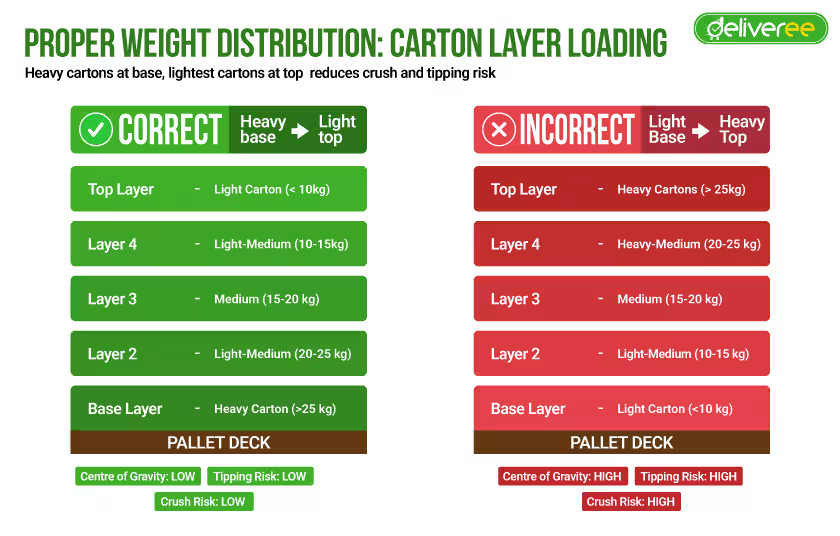
Shippers must verify that every carton’s ECT (Edge Crush Test) rating supports the cumulative weight of all cartons stacked above it before sealing the pallet. A carton at the bottom of a five-high stack carries the combined compression load of four cartons above it, amplified by dynamic vessel motion forces across the full ocean transit.
2. Protecting Fragile Items
Protecting fragile items in LCL shipping means wrapping each breakable or impact‑sensitive product individually and filling all voids so the item cannot move inside its packaging or touch rigid surfaces during normal handling and sea transit.
- Wrap each item individually: Use bubble wrap, foam, or other cushioning to wrap every fragile piece, securing the wrap with tape so it does not unwind in transit.
- Use inner boxes for very delicate goods: Place especially fragile items inside small inner boxes with padding, then pack those boxes into stronger outer cartons.
- Fill all voids inside cartons: Add void fill such as foam chips, air pillows, or crumpled paper so items cannot shift when the carton is gently shaken.
- Avoid direct contact with carton walls: Make sure no fragile item rests directly against the outer carton wall; there should always be a cushioning layer between the product and the box.
- Reinforce carton seams: Use strong packing tape on all seams, especially the bottom, and consider extra tape or edge protectors for heavy fragile loads.
- Mark cartons clearly as fragile: Apply Fragile and This Side Up labels on multiple faces so warehouse staff can handle and stow the cartons correctly in shared containers.
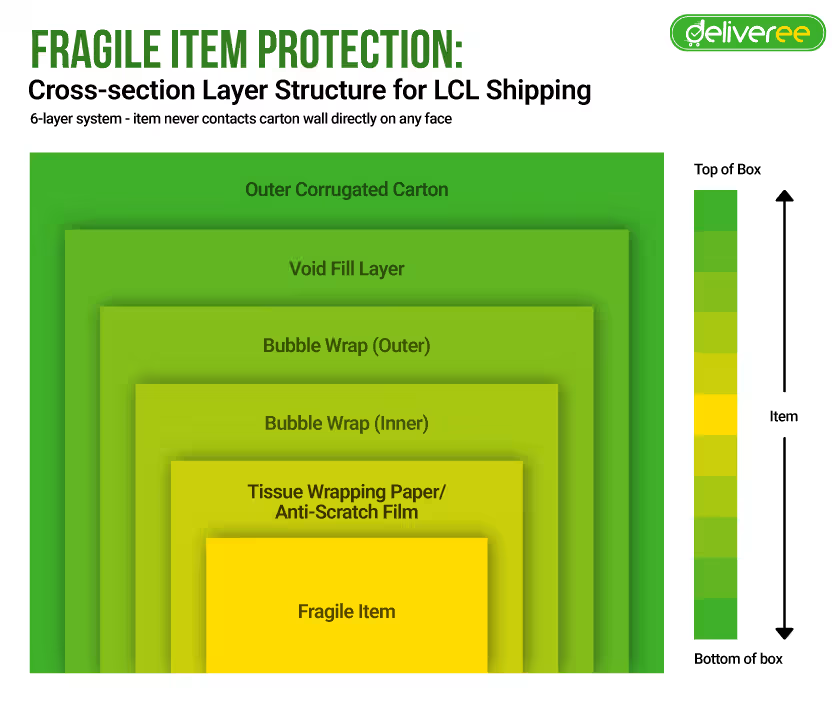
Shippers who follow these steps consistently give their breakable goods the best chance of arriving at the destination in the same condition they left the origin warehouse, and they build a clear evidence record if they ever need to support a damage claim.
3. Moisture and Weather Protection
Moisture and weather protection in LCL shipping means keeping goods, packaging, and labels dry enough that they do not weaken, mold, rust, or delaminate when exposed to humidity, condensation, or minor water ingress inside the container. Shared containers can experience “container rain” when warm, humid air condenses on cold steel walls and ceilings during sea voyages, so even cartons that never touch free water can suffer moisture damage if not protected.
- Use moisture‑resistant outer packaging: Choose cartons with good wet‑strength, plastic drums, or lined bags for goods that are sensitive to moisture or packed in humid environments.
- Add inner liners or plastic bags: Line cartons or crates with plastic bags or film for moisture‑sensitive products so any condensation on the outer packaging does not reach the goods.
- Include desiccants where appropriate: Place silica gel or other desiccant packs inside cartons or crates for products that rust, mold, or clump easily in humid conditions.
- Seal cartons and wraps carefully: Close cartons fully and seal seams with tape, and pull stretch wrap tight around pallet loads so water cannot easily enter from the top or sides.
- Keep pallets off wet floors: Store pallets on dry, raised surfaces in warehouses and keep them off wet ground during loading to prevent moisture wicking into the bottom cartons.
- Use weather‑resistant labels: Apply water‑resistant labels or place labels inside clear pouches so addresses and handling marks remain readable if cartons get damp.
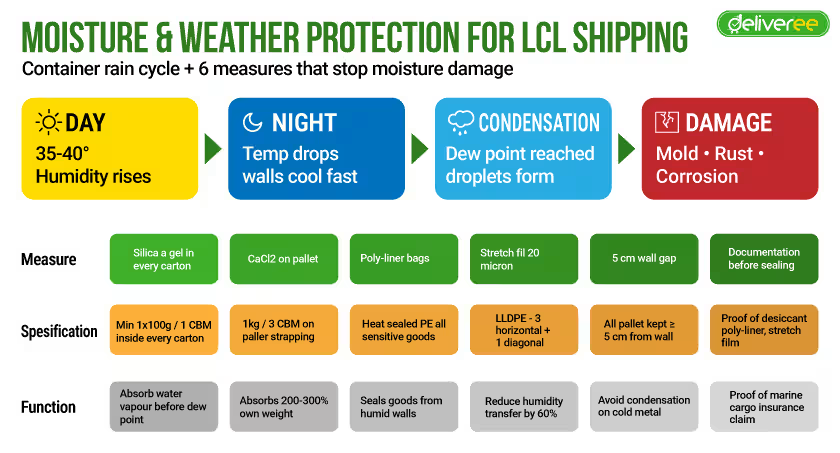
Moisture protection is especially relevant for Indonesian LCL shippers because loading conditions in equatorial ports combined with the temperature changes along sea routes including to East Asia, Europe, North America and Australia create exactly the conditions where container rain is most likely to occur.
What are the Common Packing Mistakes in LCL Shipping
The three most common packing mistakes in LCL shipping are overpacking or underpacking, poor labeling, and weak packaging materials. These mistakes drive a large share of preventable cargo damage, consolidation intake rejections, and customs clearance delays on international routes, especially where shipments pass through multiple handling points and climate zones.
- Overpacking or underpacking: Cartons are either stuffed until walls bulge or left with large empty gaps so goods shift and boxes fail under stacking loads.
- Poor labeling: Cartons lack clear, durable labels that match documents, which leads to misrouted cargo and customs queries at deconsolidation.
- Weak packaging materials: Shippers use thin cartons, damaged or non‑compliant pallets, or low‑strength strapping that cannot withstand export‑grade LCL handling.
Each weakness leads to a different damage outcome. Carton failure crushes or contaminates goods, non‑compliant pallets get rejected at customs and force costly repacking at destination, and failed strapping lets pallet loads collapse and create multiple damage events in a single incident. Shippers who build a short standard materials list and check it before every LCL booking, covering carton quality, pallet compliance, and strapping type, deal with all three weak‑material risks before cargo ever reaches the consolidation warehouse.
1. Overpacking or Underpacking
Overpacking or underpacking in LCL shipping happens when shippers stuff cartons beyond their structural limit or leave large empty spaces inside boxes so loads either bulge and burst or collapse under stacking pressure. Both extremes increase the chance of compression damage, carton failure, and rejection at the consolidation warehouse.
⚠️ Risk: Bulging or Collapsing Cartons
Overpacked cartons bulge at the sides and top, making them hard to stack and more likely to burst or shift in transit, while underpacked cartons cave in when other loads are stacked on top.
Best Practice Correction:
- Match carton strength and size to the product weight and avoid exceeding manufacturer weight limits.
- Fill internal voids with cushioning so items cannot move, and close cartons fully so the top panel can distribute stacking loads.
Shippers who right size cartons to match product dimensions and fill void space to the carton top before sealing cut damage from inner goods movement and carton structural failure by a significant margin, and freight forwarder and cargo insurance data consistently show fewer collapse events when correct void fill and sizing are applied on every LCL booking.
2. Poor Labeling
Poor labeling in LCL shipping means cartons and pallets do not clearly show who shipped them, where they are going, or what they contain, making it harder for warehouse staff and customs to route and clear the cargo correctly. Unclear or missing labels increase the chance of misrouted, delayed, or unidentified cartons in shared‑container operations.
⚠️ Risk: Misrouted or Delayed Cargo
Inadequate labels can cause cartons to be separated from their paperwork, delayed at deconsolidation, or even treated as unclaimed cargo if staff cannot match them to a booking.
Best Practice Correction:
- Print clear, durable labels showing shipper, consignee, destination, booking reference, and piece counts on multiple faces of each unit.
- Add HS codes and simple product descriptions on outer cartons where appropriate so customs and warehouse staff can identify goods without opening boxes.
Shippers who use weatherproof labels, place them on multiple carton faces, and confirm that every label field matches the shipping documents remove the most common labeling failure points from their LCL workflow and sharply reduce misrouting and customs hold events on shared container bookings.
3. Weak Packaging Materials
Weak packaging materials in LCL shipping are boxes, crates, or pallets that cannot withstand stacking, vibration, and repeated handling in shared containers, even if they work for short domestic moves. Using thin cartons, damaged pallets, or non‑export‑grade materials raises the risk of collapse, puncture, and water damage during the voyage.
⚠️ Risk: Structural Failure in Transit
When packaging fails under load, goods can break, spill, or shift across the pallet, damaging both the shipment and nearby cargo inside the shared container.
Best Practice Correction:
- Upgrade to export‑grade cartons, pallets, and wraps rated for the shipment’s weight and handling profile.
- Replace any damaged pallets or boxes before loading and use corner protection, straps, and full pallet wrap to keep the structure intact through consolidation and deconsolidation.
Shippers who specify strong double wall cartons, ISPM 15 pallets, PET strapping, and new outer cartons for every LCL booking address the material specification failures that freight forwarders and marine cargo insurers most often highlight as drivers of structural cargo damage inside shared containers.
What are the Advantages of LCL Shipping for Small, and Large Businesses?
LCL shipping offers three main advantages that benefit both small and large businesses, which are cost savings for small shipments, flexible shipping volumes, and access to global shipping routes without needing full containers on every lane. These advantages let companies match shipping costs more closely to actual demand while still reaching distant markets.
- Cost Savings for Small Shipments: Shippers pay only for the space or weight they use instead of a whole container, which reduces costs for smaller loads that do not fill a 20‑foot or 40‑foot container.
- Flexible Shipping Volumes: Businesses can send goods more frequently in smaller batches without waiting to accumulate full‑container quantities, keeping inventory closer to sales cycles.
- Access to Global Shipping Routes: Smaller shippers can access established international trade lanes through LCL consolidators without needing direct contracts or full‑container commitments with shipping lines.
LCL shipping’s three advantages combine to produce a shipping cost structure that scales with the shipper’s actual cargo volume rather than a fixed container cost that penalizes businesses for shipping less than a full box.
1. Cost Savings for Small Shipments
Cost savings for small shipments is the key LCL advantage for Indonesian businesses shipping between 1 CBM and roughly 14 CBM per booking. LCL shipping lets shippers pay only for the cubic meters or weight they actually use in a shared container instead of paying for an entire 20‑foot or 40‑foot container, which can significantly reduce costs for smaller loads. This cost structure especially benefits small and medium‑sized businesses that ship in frequent, partial loads rather than in large production batches.
💡 Example: 8 CBM shipment vs FCL
An 8 CBM shipment on a Jakarta–Makassar route that charges IDR 300,000 per CBM under LCL pricing would cost around IDR 2,400,000 in LCL charges, while an equivalent 20‑foot FCL booking might cost several million rupiah more once ocean freight and origin/destination charges are included.
In practice, shipments under roughly 10–12 CBM are often cheaper on an LCL basis than taking a full 20‑foot container once all local charges are included, while shipments between about 12 and 18 CBM should be quoted both ways to compare LCL and FCL options. Larger businesses also use LCL strategically to avoid sending half‑empty containers when they are testing new products or routes and do not yet have enough volume to fill full containers consistently.
2. Flexible Shipping Volumes
LCL shipping gives businesses the flexibility to send goods in smaller, more frequent batches instead of waiting to build full‑container loads, which helps keep inventory levels closer to real sales demand. The flexibility reduces the need for large warehouse space and cuts the risk of tying up cash in slow‑moving stock produced just to fill a container.
💡 Example: Monthly vs quarterly shipments
A retailer that previously waited to accumulate 18–20 CBM every quarter can switch to shipping 6–7 CBM each month via LCL, reducing peak warehouse inventory and aligning inbound stock more closely with monthly sales cycles.
Compared with FCL, where shippers often wait to reach a certain volume threshold before booking, LCL allows both small and large businesses to react faster to changes in demand, test new markets with smaller quantities, and smooth out their production and shipping schedules. As volumes grow and stabilize, shippers can then compare LCL and FCL quotes and switch specific high‑volume lanes to full containers while keeping LCL for lower‑volume or seasonal routes.
3. Access to Global Shipping Routes
LCL shipping opens access to global shipping routes for businesses that do not have enough volume or negotiating power to book full containers directly with carriers on every lane. By consolidating multiple small shipments into shared containers, freight forwarders let smaller exporters and importers use the same major trade lanes that large shippers rely on, often with door‑to‑door or port‑to‑door service.
💡 Example: Small exporter using LCL
A small manufacturer that sells only a few pallets per order can still reach buyers in distant markets by booking LCL space through a forwarder that already runs regular consolidations on those routes, instead of needing to sign direct vessel contracts or commit to full containers.
Compared with FCL, where shippers may hesitate to open new markets until they can fill full containers consistently, LCL allows both small and large businesses to trial new destinations and customers with modest volumes first. Once demand grows, they can either continue using LCL for flexible replenishment or upgrade specific lanes to regular FCL services while still relying on LCL to cover smaller or seasonal routes.
How to Prepare Goods for LCL Shipping with Deliveree
Preparing goods for LCL shipping with Deliveree means completing a few clear steps from booking to final delivery so your cargo meets Deliveree’s service rules and passes consolidation intake smoothly. The three main stages are booking an LCL shipment, preparing cargo for pickup, and tracking the shipment through to delivery.
- Booking an LCL Shipment with Deliveree: Use the Deliveree app or web platform to enter shipment details, confirm that your goods are allowed under Deliveree’s prohibited‑items policy, and receive an LCL price based on volume, weight, and route.
- Preparing Cargo for Pickup: Pack, label, and palletize goods to export quality standards, make sure documents and weights match what you will declare in the booking, and have the cargo ready at the agreed pickup time.
- Tracking and Delivery Process: Monitor your shipment using Deliveree’s real‑time tracking, respond to any documentation or delivery confirmations requested by support, and check the cargo condition and count on arrival.







 Chat
Chat