







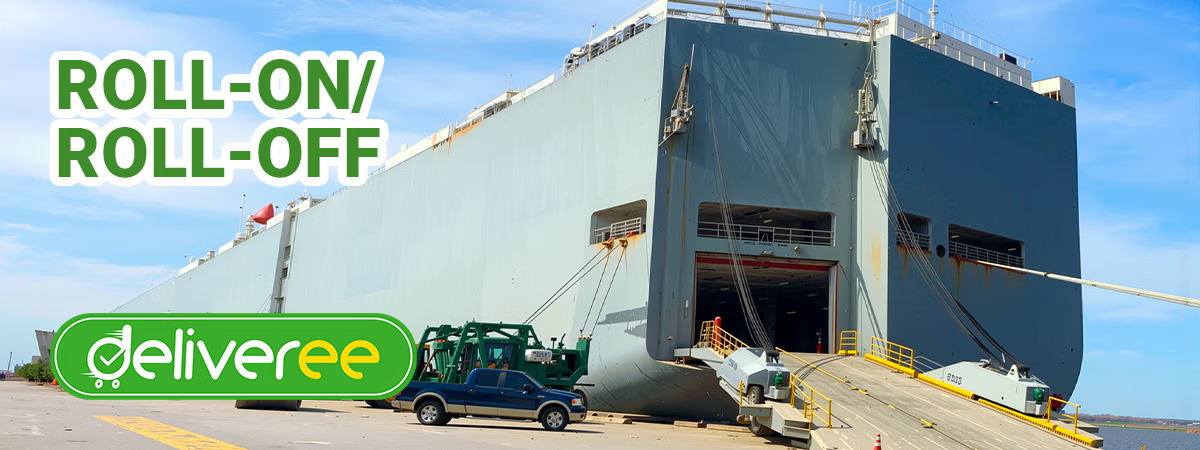
Roll-on/Roll-off (RoRo) adalah metode pengiriman maritim di mana kendaraan beroda dan kargo beroda dikemudikan langsung naik ke kapal melalui ramp bawaan. RoRo memungkinkan kendaraan dikemudikan turun melalui ramp yang sama di pelabuhan tujuan. Roll-on/Roll-off tidak memerlukan crane atau kontainer pada tahap mana pun. Kargo RoRo tetap berada di atas rodanya dari pelabuhan asal hingga pelabuhan tujuan.
Kapal RoRo mengangkut kargo beroda di beberapa geladak internal menggunakan stern ramp, bow ramp, atau side ramp. Kapal RoRo berbeda dari kapal kargo standar karena kapal RoRo memuat kargo melalui ramp alih-alih sistem lift-on/lift-off berbasis crane. Jenis kapal RoRo mencakup kapal Roll-on-Roll-off standar, feri Roll-on/Roll-off, dan Pure Car and Truck Carriers (PCTC). Pengiriman RoRo menawarkan waktu putar kapal di pelabuhan yang lebih cepat dan risiko penanganan yang lebih rendah untuk kargo beroda. Batasan pada jenis kargo, jangkauan pelabuhan, dan paparan cuaca adalah faktor yang perlu direncanakan oleh shipper. Di Indonesia, pengiriman RoRo menghubungkan kendaraan, penumpang, dan kargo beroda di seluruh kepulauan melalui PT ASDP Indonesia Ferry (Persero), yang mengoperasikan lebih dari 250 kapal di lebih dari 300 rute feri di pelabuhan dari Sabang hingga Merauke.
Proses pengiriman RoRo berjalan dalam lima langkah dari pemesanan hingga penurunan melalui ramp. Kargo yang cocok berkisar dari mobil penumpang dan sepeda motor hingga peralatan berat berukuran besar di atas trailer. PCTC adalah kapal pengangkut kendaraan khusus yang mendedikasikan sebagian besar geladaknya untuk kargo beroda, sehingga lebih hemat biaya per unit pada rute ekspor otomotif dibandingkan feri RoRo standar. Tarif angkutan RoRo dikenakan berdasarkan ruang geladak, bukan per kilogram. Hal ini menjadikan RoRo opsi berbiaya lebih rendah untuk kendaraan besar dan peralatan berukuran besar yang tidak dapat dimuat dalam kontainer standar. Car carrier dan truk flatbed menangani pengiriman last-mile ke terminal pelabuhan RoRo. Ketika pelabuhan tujuan mendukung ramp dan kargo memiliki roda, RoRo mengungguli less than container load (LCL) dalam hal biaya dan kecepatan setiap saat.
Apa itu RoRo dalam Pengiriman?
RoRo dalam pengiriman adalah singkatan dari Roll on Roll off, sebuah nama yang secara resmi digunakan oleh International Maritime Organization (IMO) untuk mengklasifikasikan kapal yang tersertifikasi untuk operasi pemuatan kargo secara horizontal. Nama tersebut merupakan deskripsi literal dari dua operasi, yaitu roll on di pelabuhan asal dan roll off di pelabuhan tujuan. Tidak ada crane, tidak ada kontainer, dan tidak ada pengangkatan pada tahap mana pun.
Pengiriman RoRo berbeda dari pengiriman kontainer dalam satu cara utama. Kargo tetap berada di atas rodanya sepanjang perjalanan, diparkir di geladak internal kapal alih-alih disegel di dalam kotak baja. Pengiriman kontainer mengharuskan kendaraan dimuat ke dalam kontainer terlebih dahulu. RoRo melewati tahap tersebut sepenuhnya, itulah sebabnya RoRo menghasilkan waktu putar kapal di pelabuhan yang lebih cepat pada rute ber-volume tinggi.
Kapal RoRo mengangkut mobil penumpang, truk komersial, bus, mesin konstruksi, peralatan pertanian, dan kargo berukuran besar yang tidak sesuai dengan dimensi kontainer standar. Industri otomotif, pertambangan, dan perkebunan Indonesia mengandalkan RoRo sebagai metode transportasi antarpulau default untuk setiap kategori kargo yang disebutkan di atas.
Layanan FTL Deliveree menjaga satu truk penuh Anda tetap terisi dari penjemputan hingga pengantaran, termasuk penyeberangan feri RoRo, sehingga tidak ada seorang pun yang membongkar atau mengemas ulang barang Anda di titik perpindahan mana pun. Tanpa muat ulang berarti risiko kerusakan lebih rendah. Kalkulator harga Deliveree memberi Anda tarif pengiriman untuk rute apa pun dalam waktu kurang dari 30 detik, dan fitur Instant Quote menampilkan total biaya di awal, tanpa biaya tersembunyi yang ditambahkan di akhir.
Apa Arti Roll-on/Roll-off dalam Transportasi Maritim?
“Roll-on/Roll-off” dalam transportasi maritim menjelaskan dua operasi fisik yang mendefinisikan metode tersebut. “Roll-on” adalah tindakan mengemudikan atau menarik kargo beroda naik ke ramp kapal dan masuk ke kapal di pelabuhan asal. “Roll-off” adalah mengemudikan atau menarik kargo yang sama turun kembali melalui ramp di pelabuhan tujuan. Ini adalah deskripsi mekanis tentang bagaimana kargo bergerak melalui kapal. Istilah ini hanya berlaku untuk kargo beroda, berantai (tracked), atau yang dipasang pada trailer yang dapat bergulir melintasi ramp.
RoRo berada dalam kontras operasional langsung dengan pengiriman Lift-on/Lift-off (LoLo), di mana crane mengangkat kargo secara vertikal ke dalam ruang muat kapal. Kargo RoRo bergerak secara horizontal sementara kargo LoLo bergerak secara vertikal. Kedua metode tidak memiliki kesamaan pada tahap pemuatan, sehingga pilihan di antara keduanya sepenuhnya bergantung pada apakah kargo memiliki roda.
Apakah Kapal RoRo Didesain Agar Kendaraan Dapat Mengemudi Langsung Masuk dan Keluar Kapal?
Ya, sistem ramp bawaan kapal RoRo memungkinkan kendaraan dikemudikan langsung naik dan turun tanpa peralatan crane atau mesin pemuatan eksternal pada tahap mana pun. Kapal RoRo menerapkan desain direct-drive ini melalui tiga konfigurasi ramp.
- Stern ramp adalah tipe yang paling umum, digunakan di terminal RoRo khusus di seluruh Indonesia, termasuk Merak, Bakauheni, Ketapang, dan Gilimanuk.
- Bow ramp memungkinkan pemisahan penuh dari collision bulkhead sesuai persyaratan SOLAS.
- Side atau quarter ramp dipasang pada sudut 30 hingga 40 derajat terhadap garis tengah kapal, memungkinkan sandar di dermaga konvensional tanpa infrastruktur pelabuhan RoRo khusus.
Ramp geladak internal memiliki kemiringan 1:7 hingga 1:10, setara dengan sekitar 6 hingga 8 derajat, memungkinkan mobil penumpang, truk, dan trailer berat berpindah antar geladak tanpa bantuan mekanis eksternal.
Apa Itu Kapal RoRo?
Kapal RoRo adalah kapal laut khusus yang dibangun untuk kargo beroda. Kapal ini menggunakan stern ramp, bow ramp, atau side ramp yang memungkinkan kendaraan dikemudikan naik di pelabuhan asal dan turun di pelabuhan tujuan. Carrier dan shipper juga menyebutnya kapal RoRo atau vehicle carrier, bergantung pada jenis kargo utama yang ditangani.
Kapal RoRo memiliki antara 5 hingga 14 geladak kargo internal yang dihubungkan oleh sistem ramp internal tetap dan bergerak, sehingga satu kapal mampu menangani ratusan hingga ribuan unit beroda dalam satu perjalanan. Geladak-geladak internal tersebut tidak memiliki dinding sekat melintang (transverse bulkhead) di antara mereka, sehingga kendaraan dapat dikemudikan tanpa hambatan dari stern ramp ke posisi mana pun di dalam kapal. Desain dek terbuka ini sekaligus menjadi fitur yang membuat operasi RoRo dimungkinkan secara operasional dan karakteristik struktural yang membedakannya dari setiap jenis kapal kargo lainnya.
Di Indonesia, kapal RoRo beroperasi dalam tiga kategori ukuran yang disesuaikan dengan hierarki rute nasional. Feri kecil berkapasitas 300 hingga 700 GT melayani penyeberangan perintis, feri menengah 700 hingga 3.900 GT melayani rute antarpulau standar, dan kapal besar di atas 5.000 GT menangani rute komersial berkepadatan tinggi dan penyeberangan ASEAN, sebagaimana didefinisikan dalam aturan klasifikasi kapal Biro Klasifikasi Indonesia (BKI).
Truk full truckload (FTL) Deliveree menggunakan jaringan feri RoRo nasional Indonesia, yang didominasi oleh PT ASDP Indonesia Ferry (Persero) sebagai operator BUMN terbesar yang mengoperasikan lebih dari 220 kapal di lebih dari 300 rute dan 36 pelabuhan feri khusus. Pengemudi mengemudikan truk bermuatan naik ke kapal feri ASDP di pelabuhan asal, menyeberang, lalu langsung mengemudikan truk keluar di pelabuhan tujuan. Tidak perlu memesan layanan RoRo secara terpisah.
Bagaimana Kapal RoRo Berbeda dari Kapal Kargo Standar?
Kapal RoRo berbeda dari kapal kargo standar dalam dua cara mendasar. Perbedaan pertama adalah tata letak geladak internal. Perbedaan kedua adalah arah pemuatan.
Geladak kendaraan kapal RoRo membentang terbuka sepenuhnya dari buritan hingga haluan tanpa sekat melintang (transverse bulkhead) di antaranya, sehingga kendaraan dapat dikemudikan sepanjang kapal tanpa hambatan pada geladak mana pun. Kapal kargo standar membagi lambungnya ke dalam palka kargo tertutup menggunakan sekat melintang kedap air (watertight transverse bulkhead), dengan semua kargo diangkat secara vertikal ke setiap palka oleh crane, sesuai SOLAS Bab II-2.
Konsekuensi struktural dari perbedaan tata letak geladak ini adalah ketidakcocokan total pada desain lambung. Kapal kargo standar menggunakan lambung yang ramping dan menyempit untuk efisiensi bahan bakar dan kecepatan. Kapal RoRo menggunakan lambung berbentuk persegi dengan sisi rata yang dioptimalkan untuk volume kargo di dalamnya. Desain lambung ini menjadi salah satu alasan kapal kontainer standar tidak dapat melayani kargo beroda seperti yang dilakukan kapal RoRo. Kapal RoRo mengorbankan performa lambung demi ruang dek yang rata dan terbuka yang dibutuhkan untuk mengemudikan dan memarkir ratusan kendaraan dalam satu perjalanan.
Apakah Kapal RoRo Hanya Mengangkut Kargo Beroda?
Tidak, kapal RoRo mengangkut kargo beroda sebagai jenis kargo utamanya, tetapi operator juga dapat memindahkan kargo tidak beroda dan tidak dapat dikemudikan menggunakan peralatan penanganan khusus. Alat yang paling umum untuk metode ini adalah trailer MAFI.
Trailer MAFI adalah platform beroda bertempat tidur rendah untuk kargo statis. Petugas terminal menempatkan kargo di atas trailer dan menariknya naik ke ramp dengan tugger. Proses tersebut memberikan akses ke kapal RoRo bagi barang breakbulk seperti komponen turbin angin, generator industri, dan mesin produksi yang dibongkar tanpa menggunakan crane atau peralatan pengangkatan apa pun.
Kapal RoRo juga mengangkut project cargo. Project cargo adalah barang berukuran besar, berat, dan bernilai tinggi yang tidak dapat dimuat dalam kontainer standar, termasuk komponen pembangkit listrik, peralatan lepas pantai, dan unit kilang.
Dua jenis kapal hibrida menangani kargo beroda dan tidak beroda dalam keberangkatan yang sama. Kapal RoLo (Roll-on/Lift-off) menggabungkan sistem ramp RoRo dengan crane di atas kapal, menangani kargo beroda melalui ramp dan kargo tidak beroda berbasis lift melalui peralatan crane tersebut. Kapal ConRo (Container/Roll-on) menumpuk kontainer di geladak atas terbuka sementara geladak bawah tertutupnya mengangkut kargo beroda dalam perjalanan yang sama.
Bagaimana Cara Kerja Pengiriman RoRo?
Pengiriman RoRo bekerja dengan cara mengemudikan kargo beroda naik ke kapal melalui ramp bawaan di pelabuhan asal. Kargo tetap terikat aman di geladak selama pelayaran, lalu dikemudikan turun di pelabuhan tujuan. Metode ini tidak memerlukan crane atau peralatan pengangkat.
Pengiriman RoRo menjaga kargo tetap pada permukaan horizontal sepanjang proses penanganan di pelabuhan. Hal itu menghilangkan fase suspensi di udara ketika kargo yang diangkat crane menghadapi risiko benturan dan ayunan yang lebih tinggi.
Proses muat lebih cepat dibanding metode berbasis crane, dan keunggulan kecepatan tersebut meningkat seiring bertambahnya ukuran kapal. Proses lengkap dari pemesanan hingga pembongkaran di pelabuhan mengikuti lima tahap berurutan. Tahap-tahap ini adalah pemesanan, pengiriman ke pelabuhan, pemuatan via ramp, pelayaran laut, dan pembongkaran via ramp.
Layanan pengiriman RoRo Deliveree dirancang agar berjalan mulus. Anda memesan truk khusus secara online melalui aplikasi atau situs web Deliveree, memasukkan lokasi penjemputan, tujuan, jenis kendaraan, dan jadwal, lalu seorang pengemudi menjemput kargo Anda di titik asal. Truk tersebut kemudian tetap dalam kondisi terisi sepanjang perjalanan, yang berarti ketika rute melintasi antarpulau, truk langsung mengemudi naik ke kapal feri RoRo di pelabuhan asal, menyeberang laut dengan kargo Anda yang terikat aman di atas kapal, dan mengemudi turun di pelabuhan tujuan tanpa seorang pun menyentuh atau mengemas ulang barang Anda.
Apa Proses Pengiriman RoRo Langkah demi Langkah?
Proses pengiriman RoRo di Indonesia mengikuti lima langkah berurutan dari pemesanan awal hingga pembongkaran di terminal.
Langkah 1 adalah pemesanan. Pesan ruang kargo melalui Perusahaan Jasa Pengurusan Transportasi (PJPT) berizin atau langsung melalui sistem pemesanan operator. Untuk penyeberangan feri ASDP, reservasi kendaraan wajib dilakukan melalui aplikasi Ferizy, dengan kuota slot ditetapkan per kapasitas kapal per keberangkatan. Pengiriman komersial mewajibkan pengajuan detail kendaraan seperti jenis unit, dimensi, dan berat kotor pada tahap pemesanan.
Langkah 2 adalah pengiriman ke pelabuhan. Kirim kendaraan ke terminal RoRo yang ditunjuk sebelum batas waktu cut-off kapal. Sebuah kendaraan akan ditolak di gerbang terminal jika terjadi salah satu dari hal berikut:
- Nomor registrasi tidak sesuai dengan e-ticket
- Berat melebihi kapasitas maksimum dermaga
- Tinggi melebihi batas ruang bebas terminal
- Kendaraan melanggar ketentuan ODOL (Over Dimension Over Loading)
Langkah 3 adalah pemuatan via ramp. Tenaga Kerja Bongkar Muat (TKBM) mengemudikan kendaraan naik melalui ramp buritan ke posisi yang ditetapkan dalam rencana penataan muatan (stowage plan) milik mualim muat. Tim lashing kemudian mengikat setiap kendaraan dengan strap, rantai, tensioner, dan ganjal roda (chocks). Kru juga mengaktifkan rem tangan dan mengatur persneling ke posisi parkir atau gigi satu. Pemuatan via ramp membawa risiko operasional tertinggi dalam proses lima langkah ini karena kesalahan penempatan kendaraan saat pemuatan secara langsung memengaruhi stabilitas kapal dan integritas pengikatan kargo selama seluruh pelayaran laut.
Langkah 4 adalah pelayaran laut. Kapal berangkat setelah Syahbandar memastikan seluruh pengikatan, jumlah penumpang, dan persyaratan peralatan keselamatan telah terpenuhi dan menerbitkan SPB (Surat Persetujuan Berlayar). Waktu tempuh penyeberangan domestik bervariasi menurut rute:
- Ketapang–Gilimanuk (Jawa–Bali): 30 menit
- Merak–Bakauheni (Jawa–Sumatra): 90 menit
- Surabaya–Makassar: hingga 18 jam
Langkah 5 adalah pembongkaran via ramp. TKBM mengemudikan setiap kendaraan turun dari kapal melalui ramp dengan urutan berlawanan dari urutan muat. Inspektur terminal kemudian membandingkan kondisi setiap kendaraan setelah pelayaran dengan dokumentasi pra-pengapalan. Persyaratan dokumentasi bergantung pada jenis pengiriman. Untuk pengiriman internasional diperlukan PIB (Pemberitahuan Impor Barang) dan dilanjutkan ke proses clearance bea cukai di bawah DJBC (Direktorat Jenderal Bea dan Cukai), sedangkan penyeberangan domestik antarpulau memerlukan manifest kargo sebelum consignee dapat mengambil kendaraan.
Apakah Kargo RoRo Diamankan di Dalam Kapal Selama Perjalanan?
Ya, kargo RoRo diamankan selama pelayaran. Operator mengamankan setiap unit kargo ke geladak kapal sebelum keberangkatan menggunakan sistem lashing wajib. Kode IMO Code of Safe Practice for Cargo Stowage and Securing (CSS Code) menjadikan pengikatan kargo sebagai persyaratan wajib. Indonesia menerapkan CSS Code melalui Permenhub Nomor 30 Tahun 2016.
Pengikatan kargo RoRo menggunakan empat komponen utama: lashing strap, rantai baja, perangkat penegang (tensioning devices), dan ganjal karet (rubber chocks). Regulasi mewajibkan penggunaan rantai baja untuk semua kendaraan beroda dengan gross vehicle mass (GVM) di atas 3,5 ton. Lashing strap digunakan untuk mengikat kendaraan yang lebih ringan, termasuk mobil penumpang dan van ringan. Tim lashing menempatkan ganjal karet pada setiap roda untuk mencegah gerakan menggelinding, lalu mengencangkan seluruh sistem ke geladak sebelum kapal berangkat.
Kru mengencangkan kembali seluruh peralatan pengikat selama beberapa jam pertama pelayaran di perairan terbuka. Pengencangan ulang tersebut mengompensasi hilangnya tegangan akibat gerakan kapal.
Syahbandar di setiap pelabuhan keberangkatan di Indonesia memiliki kewenangan untuk tidak menerbitkan Surat Persetujuan Berlayar (SPB) bagi kapal RoRo mana pun yang pengikatan kargonya tidak memenuhi standar Cargo Securing Manual (CSM) kapal. Kewenangan tersebut berlaku untuk PT ASDP Indonesia Ferry (Persero) dan semua operator RoRo swasta yang menjalankan rute domestik.
Apa Itu Kapal Feri RoRo?
Feri RoRo, juga disebut kapal RoPax (Roll-on/Roll-off Passenger), adalah kapal laut yang menggabungkan sistem ramp pemuatan kendaraan dengan akomodasi penumpang khusus dalam kapal yang sama. Kapal RoPax mengangkut kendaraan dan penumpang dalam pelayaran yang sama. Kendaraan dimuat di bawah geladak melalui ramp buritan atau haluan, sementara penumpang melakukan perjalanan di kabin geladak atas, area tempat duduk, dan lounge yang terpisah. IMO menetapkan ambang resmi pada 12 penumpang. Setiap kapal RoRo yang berizin mengangkut lebih dari 12 penumpang dikategorikan sebagai feri RoRo menurut aturan keselamatan maritim internasional.
Feri RoRo beroperasi terutama pada rute laut pendek (short-sea) dan koridor antarpulau di mana pelaku perjalanan perlu menyeberang laut dengan kendaraan milik sendiri. Di Indonesia, feri RoRo merupakan penghubung utama antar komunitas pulau ketika jaringan jalan berakhir di garis pantai. Feri RoRo juga beroperasi pada rute penyeberangan pendek intra-ASEAN. Rute-rute ini menghubungkan Indonesia dengan pasar terdekat seperti Malaysia dan Filipina.
Feri RoRo mengangkut kendaraan penumpang, truk komersial, sepeda motor, dan komoditas pertanian dalam keberangkatan yang sama. Fungsi ganda tersebut menjadikan feri RoRo sebagai tulang punggung jaringan transportasi antarpulau di Indonesia.
Truk full truckload (FTL) Deliveree menggunakan jaringan feri RoRo Indonesia untuk pengiriman antarpulau dengan cara yang sama seperti truk komersial lainnya. Pengemudi bergabung dalam antrean feri reguler di pelabuhan asal dan mengemudikan truk bermuatan naik ke kapal melalui ramp buritan. Truk tersebut berada di dek kendaraan sepanjang penyeberangan laut berdampingan dengan kendaraan penumpang, sepeda motor, dan kargo komersial lainnya. Barang tetap tersegel di dalam atau di atas truk selama penyeberangan, tanpa dipindahkan ke kapal terpisah dan tanpa dibongkar di pelabuhan. Ketika feri sandar di pulau tujuan, pengemudi menurunkan truk melalui ramp dan langsung melanjutkan perjalanan ke alamat pengiriman.
Bagaimana Kapal Feri RoRo Beroperasi untuk Transportasi Kendaraan?
Feri RoRo mengoperasikan pengangkutan kendaraan melalui empat fase berurutan pada setiap penyeberangan. Fase-fase tersebut adalah pengaturan di area marshalling terminal, boarding melalui ramp, pengikatan di dek, dan pembongkaran via ramp. Kendaraan tetap berada di dek bawah sepanjang pelayaran sementara penumpang bepergian di dek atas yang terpisah, sehingga arus pejalan kaki benar-benar terpisah dari area pemuatan kendaraan.
Di terminal asal, petugas mengarahkan mobil penumpang, sepeda motor, truk komersial, dan bus ke lajur marshalling yang terpisah sebelum boarding dimulai.
Kapal feri terhubung ke dermaga melalui sebuah linkspan. Linkspan adalah platform berengsel yang dapat disesuaikan yang mengompensasi perbedaan tinggi pasang surut antara dek kendaraan kapal dan ramp darat. Fungsi linkspan adalah menjaga permukaan lintasan kendaraan tetap menerus antara dermaga dan kapal pada semua kondisi pasang surut.
Kendaraan naik ke kapal mengikuti urutan yang ditetapkan dalam rencana penataan muatan (stowage plan) milik mualim muat. Truk berat dan bus dimuat terlebih dahulu ke dek bawah demi stabilitas kapal. Mobil penumpang yang lebih ringan menyusul, dengan sepeda motor dimuat terakhir.
Setelah setiap kendaraan mencapai posisi dek yang telah ditetapkan, tim lashing mengaktifkan rem tangan, mengatur posisi transmisi ke parkir atau gigi satu, dan menempatkan ganjal roda di sekitar ban. Operator wajib melakukan lashing pada setiap kendaraan selama pelayaran sesuai Peraturan Menteri Perhubungan Nomor 115 Tahun 2016, tanpa memandang durasi penyeberangan. Di terminal tujuan, kendaraan dikemudikan turun dengan urutan berlawanan dari urutan muat, di mana mobil penumpang di dek atas keluar terlebih dahulu, diikuti truk dan bus dari dek kendaraan bawah.
Apakah Kapal Feri RoRo Didesain untuk Kargo Beroda?
Ya. Feri RoRo dirancang secara khusus untuk kargo bergulir sebagai fungsi utama pengangkutan kendaraannya. Setiap elemen struktural direkayasa mengelilingi satu kebutuhan, yaitu kendaraan harus dapat naik sendiri, parkir, diamankan, dan turun kembali tanpa penggunaan crane atau angkat vertikal pada tahap mana pun. Fitur desain yang mendukung hal ini mencakup bentuk lambung, ketinggian dek kendaraan, ramp buritan, dan kemiringan ramp internal.
Arsitek naval mencapai hal tersebut melalui pilihan desain yang tidak dimiliki kapal kargo standar. Tinggi bebas dek kendaraan berkisar dari 2,1 meter pada dek mobil penumpang hingga 4,5 meter pada dek bawah untuk truk komersial, disesuaikan dengan kelas kargo bergulir tertinggi yang ditangani kapal tersebut. Ramp internal yang menghubungkan dek kendaraan memiliki kemiringan sekitar 6 hingga 8 derajat, sehingga truk komersial bermuatan penuh dapat berpindah antar dek dengan tenaga sendiri tanpa stall atau kehilangan traksi. Lambung feri RoRo juga menggunakan koefisien blok yang lebih tinggi dibanding kapal kargo yang dioptimalkan untuk kecepatan, dengan sengaja menukar efisiensi hidrodinamika demi volume dek internal maksimum.
Desain dek kendaraan menjadi penggerak utama bentuk lambung. Akomodasi penumpang ditempatkan di atasnya sebagai tambahan superstruktur. Pada rute antarpulau di Indonesia, kebutuhan dek kendaraan biasanya membentuk lambung terlebih dahulu sebelum perencanaan kapasitas penumpang dilakukan.
Jenis Kargo Apa yang Cocok untuk Pengiriman RoRo?
Pengiriman RoRo cocok untuk kargo beroda dan kargo yang dapat bergerak sendiri (self-propelled). Lima jenis kargo bergerak setiap hari di rute RoRo antarpulau Indonesia.
- Kendaraan penumpang: Mobil, SUV, MPV, dan minibus
- Kendaraan komersial: Truk, bus, dan truk tangki
- Alat berat: Ekskavator, buldoser, dan traktor
- Mesin bergulir: Forklift, mesin gilas (road roller), dan mobile crane
- Kargo project di atas trailer: Genset, mesin pabrik, dan peralatan kilang
Layanan FTL Deliveree mengoperasikan armada 30.000 kendaraan yang mencakup 16 jenis kendaraan, mulai dari mobil ekonomi hingga truk tugas berat, dan rentang tersebut mencakup sebagian besar kategori kargo yang tercantum di atas. Barang komersial, peralatan industri, mesin pabrik, dan produk pertanian curah semuanya masuk dalam kapasitas FTL antarpulau Deliveree. Jika kargo Anda sesuai dengan salah satu dari 16 jenis kendaraan Deliveree, kargo akan tetap berada di truk khusus yang sama sepanjang rute, termasuk setiap penyeberangan feri RoRo. Tidak ada yang membongkar atau memindahkan kargo selama perjalanan.
Kendaraan dan Peralatan Apa yang Ideal untuk Transportasi RoRo?
Kendaraan dan peralatan yang paling cocok untuk transportasi RoRo memiliki satu sifat utama yang sama. Kendaraan tersebut dapat naik ke kapal dengan tenaga sendiri atau diangkut di atas platform beroda. Kargo tiba tanpa perlu dibongkar, diangkat dengan crane, atau dirakit kembali.
- Mobil penumpang dan SUV. Setiap mobil, SUV, MPV, atau minibus yang dapat dikemudikan dan memiliki rem tangan yang berfungsi langsung memenuhi syarat. Unit kendaraan ini self-propelled, berisiko rendah, dan cepat dimuat. Indonesia mengekspor 284.285 kendaraan penumpang melalui laut dalam tujuh bulan pertama tahun 2025 menurut data Gabungan Industri Kendaraan Bermotor Indonesia (GAIKINDO), hampir seluruhnya melalui RoRo.
- Bus antarkota dan truk komersial. Bus antarkota standar di Indonesia berukuran sekitar 12 meter panjang dan 3,6 meter tinggi, jauh melampaui clearance internal kontainer mana pun. Truk boks, truk tangki, dan truk tipper menghadapi batas dimensi yang sama. RoRo adalah satu-satunya metode angkutan laut yang dapat memindahkan satu unit bus rakitan utuh antarpulau dalam satu kesatuan.
- Sepeda motor. Pekerja TKBM memuat sepeda motor dengan cepat, memarkirnya rapat, dan mengamankan setiap unit dengan ganjal roda dan strap pada ban. Hanya di lintasan Ketapang-Gilimanuk saja, keberangkatan berlangsung setiap jam. Frekuensi ini menjadikan sepeda motor sebagai unit kargo bervolume tertinggi di dua lintasan RoRo tersibuk di Jawa.
- Ekskavator dan buldoser. Ekskavator 20 ton terlalu lebar dan terlalu tinggi untuk kontainer standar mana pun, dan pengangkatan dengan crane dapat memberikan tegangan lebih besar pada rangka dan lengan hidrolik dibanding pemuatan via ramp. Mesin naik ke ramp dengan track miliknya sendiri, tim lashing mengikatnya ke dek, dan alat tiba dalam kondisi siap kerja. Tanpa pembongkaran dan tanpa crane.
- Traktor pertanian dan combine harvester. Terlalu lebar untuk kontainer dan terlalu bernilai tinggi untuk mengambil risiko sling crane. Kargo ini dikirim dalam kondisi terakit penuh dan siap pakai di lahan. Pembongkaran menambah waktu perakitan ulang di tujuan yang umumnya tidak dapat ditoleransi oleh operator perkebunan selama masa tanam aktif.
- Forklift, mesin gilas, dan mobile crane. Mesin bergulir ini naik ke kapal dengan tenaga sendiri atau ditarik tugger dan dapat langsung dioperasikan di pelabuhan tujuan. Tidak ada biaya setup, tidak ada hari kerja hilang saat kedatangan.
- Genset, transformator, dan peralatan kilang di atas trailer. Kargo proyek yang tidak self-propelled tetap memenuhi syarat selama ditempatkan di atas trailer datar beroda yang ditarik naik oleh terminal tugger.
Benang merah yang sama di setiap jenis di sini adalah roda. Saat kargo ditempatkan di atas platform beroda, RoRo menjadi layak digunakan.
Dapatkah Kargo Standar Juga Diangkut melalui RoRo?
Ya, bisa, tetapi hanya jika barang freight tersebut berada di atas roda. Barang freight standar seperti karton, palet, atau karung barang tidak dapat naik ramp sendiri, sehingga tidak memenuhi syarat untuk RoRo sebagai kargo lepas. Jika barang yang sama ditempatkan terlebih dahulu di atas truk atau trailer datar, maka langsung memenuhi syarat. Truk menjadi unit bergulir dan barang di dalamnya cukup ikut bepergian bersama truk tersebut.
Inilah persis cara program Tol Laut Indonesia bekerja dalam praktik. Pemerintah memuat barang-barang bersubsidi, termasuk beras, tepung, gula, dan minyak goreng, ke atas truk. Truk-truk tersebut kemudian naik ke kapal RoRo yang berlayar menuju pelabuhan-pelabuhan Indonesia timur seperti Sorong, Timika, dan Merauke. Barangnya bergerak via RoRo bukan karena barang itu sendiri adalah kargo beroda, tetapi karena truk yang membawanya adalah unit beroda.
Aturannya, RoRo memindahkan kendaraannya. Apa pun yang berada di dalam atau di atas kendaraan tersebut ikut terbawa sepanjang perjalanan. Jika barang freight tidak berada di atas kendaraan atau trailer beroda, maka barang tersebut seharusnya dikirim menggunakan kapal kontainer atau kapal breakbulk.
Apa Itu PCTC dalam Pengiriman RoRo?
Dalam pengiriman RoRo, PCTC adalah singkatan dari Pure Car and Truck Carrier, yaitu kapal RoRo khusus yang dirancang terutama untuk mengangkut kendaraan. Sebagian besar ruang internal PCTC diatur sebagai area dek kendaraan. Satu kapal PCTC berukuran besar dapat mengangkut antara 4.000 hingga 9.300 CEU.
Produsen otomotif menggunakan PCTC untuk memindahkan kendaraan baru dari pabrik ke pasar dalam skala besar. Sebagai contoh, di Indonesia, Toyota Motor Manufacturing Indonesia (TMMIN) menggunakan Pelabuhan Patimban di Subang, Jawa Barat, sebagai salah satu pelabuhan keberangkatan utama PCTC. Pelabuhan ini melayani ekspor internasional sekaligus distribusi antarpulau dalam negeri.
PCTC berbeda dari feri RoRo dalam satu hal utama. PCTC sama sekali tidak mengangkut penumpang. Feri RoRo menukar sebagian ruang dek kendaraan untuk kabin penumpang, area tempat duduk, dan lounge. PCTC mengalokasikan ruang dek jauh lebih besar untuk kendaraan dibanding feri RoRo. Desain ini menurunkan biaya pengiriman per unit karena setiap pelayaran dapat mengangkut lebih banyak unit dengan biaya bahan bakar dan awak yang kurang lebih sama.
Bagaimana Kapal PCTC Beroperasi untuk Transportasi Kendaraan?
Kapal PCTC memuat kendaraan melalui ramp buritan. Kendaraan kemudian diparkir di antara 10 hingga 13 dek internal sebelum keberangkatan. Setiap kendaraan naik ke kapal dengan tenaga sendiri atau ditarik ke ramp oleh terminal tugger. Tim lashing mengikat setiap unit ke dek sebelum kapal berangkat. Di pelabuhan tujuan, kendaraan dikemudikan turun dengan urutan berlawanan dari urutan muat.
Di dalam PCTC, sebagian besar dek memiliki tinggi bebas plafon sekitar 2,1 hingga 2,2 meter, disesuaikan untuk mobil penumpang standar. Dek ke-5 dan ke-7 bersifat hoistable (dapat diangkat), dan ketika dinaikkan, tinggi bebas plafon dek di bawahnya meningkat hingga 5,1 meter untuk truk, bus, dan mesin konstruksi tinggi. Ramp internal yang dapat disetel di antara dek memungkinkan tim pemuatan mengarahkan kendaraan ke level yang tepat tanpa peralatan eksternal apa pun.
Apakah Kapal PCTC Secara Khusus Didesain untuk Mobil dan Truk?
Ya, dan huruf “T” dalam PCTC menentukan keunggulan struktural inti kapal ini dibanding Pure Car Carrier (PCC). PCC hanya menangani mobil penumpang pada dek dengan tinggi tetap. PCTC menangani mobil dan truk dalam pelayaran yang sama dengan menggunakan dek hoistable yang secara fisik menambah tinggi bebas antara level kargo. Perbedaan desain tunggal itulah yang membedakan kedua jenis kapal tersebut.
Komposisi ekspor otomotif Indonesia menjadikan kapasitas akomodasi truk ini sangat penting secara komersial. TMMIN dan Astra Daihatsu Motor (ADM) mengirim mobil penumpang bersama kendaraan niaga ringan, truk pikap, dan MPV ke pasar di seluruh Asia Tenggara dan Timur Tengah. Jenis kendaraan campuran tersebut membutuhkan ruang bebas dek yang dinaikkan yang hanya dapat disediakan oleh PCTC.
Apa Kelebihan Pengiriman RoRo?
Pengiriman RoRo memiliki lima keunggulan bagi pengirim yang memindahkan kargo beroda di rute antarpulau di Indonesia.
- Muat dan bongkar cepat: RoRo memungkinkan proses muat dan bongkar yang cepat karena kendaraan langsung naik dan turun tanpa setup crane, tanpa rigging, dan tanpa waktu tunggu. Kapal-kapal ASDP di lintasan Merak–Bakauheni menyelesaikan satu siklus turnaround penuh dalam waktu sekitar 90 menit. Kapal container feeder yang sebanding rata-rata menghabiskan 8 hingga 24 jam waktu sandar per kunjungan, menurut World Bank Container Port Performance Index 2024.
- Risiko penanganan lebih rendah: Tidak ada crane yang mengangkat kargo, dan tidak ada rigging yang menggantungkan kargo di udara pada tahap mana pun. Menghilangkan pengangkatan dengan crane juga menghilangkan fase suspensi di udara, yaitu saat risiko kerusakan akibat benturan dan ayunan paling sering terjadi pada operasi pengapalan LoLo.
- Efisien untuk kendaraan: Kendaraan langsung naik ke kapal tanpa kontainerisasi, tanpa biaya stuffing, dan tanpa ruang terbuang. Satu kapal PCTC besar dapat mengangkut hingga 9.300 car equivalent units per pelayaran, tingkat kapasitas yang memberikan PCTC keunggulan skala besar untuk rute kargo beroda.
- Hemat biaya untuk kargo berukuran besar: Ekskavator, bus, dan combine harvester naik melalui ramp dalam keadaan utuh dan tiba juga dalam keadaan utuh. Tidak ada pembongkaran, tidak ada crating, dan tidak ada biaya perakitan ulang di kedua ujung pelayaran.
- Jadwal yang dapat diprediksi: Kapal RoRo di rute domestik Indonesia beroperasi dengan jadwal keberangkatan tetap, sehingga pengirim tahu persis kapan kargo berangkat dan kapan tiba.
Keunggulan RoRo ini hanya berlaku untuk kargo yang dapat bergulir. Kargo tanpa roda perlu dikirim menggunakan kapal kontainer atau kapal breakbulk.
Bagaimana Transportasi Roll-On Roll-Off Meningkatkan Efisiensi dan Penanganan?
Transportasi RoRo meningkatkan efisiensi dan penanganan dengan menghilangkan operasi crane sepenuhnya. Setiap kali crane mengangkat kargo, ada tambahan waktu, biaya, dan satu peluang baru terjadinya kerusakan kargo. Ramp sekaligus mengurangi ketiganya.
Tim TKBM di terminal RoRo Indonesia menyelesaikan pemuatan via ramp untuk feri domestik standar dalam waktu kurang dari 60 menit. Setiap kendaraan mengemudi sendiri ke posisi dek yang ditentukan tanpa rigging crane, tanpa pemasangan sling, dan tanpa pengangkatan ulang jika posisi awal tidak tepat. Perbedaan waktu turnaround ini dapat diukur langsung di pelabuhan-pelabuhan Indonesia. Kapal-kapal ASDP di lintasan Merak–Bakauheni menyelesaikan satu siklus muat dan berangkat (load-and-depart) penuh dalam waktu sekitar 90 menit. Operasi crane kontainer di Tanjung Priok berlangsung jauh lebih lama untuk volume kargo yang setara.
Apakah RoRo Mengurangi Waktu Muat dan Bongkar Dibandingkan dengan Pengiriman Kontainer?
Ya, RoRo mengurangi waktu muat dan bongkar dengan menghilangkan dua sumber konsumsi waktu terbesar dalam operasi pelabuhan, yaitu setup crane dan penanganan kontainer. Kendaraan cukup mengemudi naik ke ramp, parkir di dek, dan kapal siap menerima unit berikutnya dalam hitungan menit. Tidak ada operator crane yang melakukan rigging, tidak ada peralatan angkat yang mengangkat muatan, dan tidak ada stevedore yang melakukan stuffing ke dalam kontainer pada tahap mana pun.
Operasi kapal kontainer menunjukkan biaya waktu dari ketergantungan pada crane secara langsung. Kapal feeder dengan volume yang sebanding dengan kapal RoRo regional rata-rata menghabiskan 8 hingga 24 jam waktu sandar per kunjungan, menurut World Bank Container Port Performance Index 2024. Kapal RoRo pada rute-rute tersebut menghindari waktu tunggu crane karena metode pemuatannya tidak bergantung pada crane.
Waktu sandar kapal RoRo umumnya lebih singkat daripada kapal kontainer untuk perpindahan kargo yang setara. Di Indonesia, kapal-kapal ASDP di lintasan Merak–Bakauheni menyelesaikan satu siklus turnaround penuh dalam waktu sekitar 90 menit.
Apa Kekurangan Pengiriman RoRo?
Pengiriman RoRo memiliki empat kekurangan yang terkait dengan jenis kargo, infrastruktur pelabuhan, dan cakupan rute di jaringan antarpulau Indonesia.
- Terbatas pada kargo beroda: RoRo terbatas pada kargo beroda karena barang non-beroda tidak memenuhi syarat. Kargo lepas, barang dalam karung, palet, dan apa pun yang tidak dapat naik ramp dengan cara bergulir harus dikirim menggunakan kapal kontainer atau kapal breakbulk.
- Risiko paparan cuaca: Kendaraan di dek terbuka atau semi-terbuka menghadapi paparan air asin dan kelembapan selama pelayaran. Risiko ini meningkat selama musim angin barat laut Indonesia antara November dan Maret. Pada periode tersebut, tinggi gelombang di Laut Jawa dan Selat Makassar secara rutin mencapai 3 hingga 4 meter.
- Ketergantungan pada infrastruktur pelabuhan: RoRo memerlukan terminal dengan ramp yang berfungsi, clearance sandar yang memadai, dan area penampungan kendaraan di darat. Jaringan terminal RoRo khusus di Indonesia melayani lebih sedikit pelabuhan aktif dibanding jaringan terminal yang mampu menangani kontainer. Kesenjangan ini membatasi pelabuhan yang dapat disinggahi kapal RoRo.
- Lebih kurang fleksibel untuk kargo campuran: Pengirim yang memindahkan kombinasi kargo beroda dan non-beroda pada rute yang sama tidak dapat mengkonsolidasikan semuanya dalam satu keberangkatan RoRo. Pengiriman kargo campuran biasanya memerlukan pemesanan kontainer terpisah di samping pengiriman RoRo, yang menambah biaya koordinasi.
Bagi pengirim di rute-rute mapan yang memiliki terminal berfasilitas RoRo di kedua ujung, kekurangan ini menyempit menjadi penjadwalan terkait cuaca dan perencanaan secondary haulage ke/dari pelabuhan yang layanannya belum penuh.
Layanan FTL Deliveree mengangkut kargo di dalam atau di atas bodi truk khusus yang sama sepanjang rute, termasuk saat menyeberang dengan feri, sehingga muatan tidak dibiarkan terbuka di dek kendaraan dalam kondisi musim hujan. Routing Deliveree juga secara otomatis memilih terminal yang berfasilitas RoRo, sehingga Anda tidak perlu memeriksa sendiri ketersediaan infrastruktur pelabuhan.
Risiko dan Keterbatasan Apa yang Harus Dipertimbangkan oleh Shipper?
Risiko pengiriman RoRo untuk pengirim terbagi ke dalam empat area utama. Risiko-risiko ini dapat mengakibatkan kerusakan, keterlambatan, dan sengketa asuransi. Kebakaran adalah ancaman dengan risiko tertinggi di kapal RoRo. Studi FIRESAFE milik EMSA menemukan bahwa 90% kebakaran kapal RoPax berasal dari kargo yang diangkut, bukan dari sistem mekanis atau elektrikal kapal. Dek kargo RoRo menata kendaraan dengan sangat rapat tanpa sekat internal di antara unit. Tangki bahan bakar, komponen listrik, dan baterai semuanya berada dalam ruang terbuka yang sama. Setelah kebakaran mulai di dek RoRo, api dapat menyebar cepat karena keterbatasan sekat internal di area tersebut.
Risiko paparan lainnya adalah kerusakan akibat cuaca. Kendaraan di dek terbuka atau semi-terbuka menghadapi semprotan air asin, kelembapan, dan udara lembap sepanjang pelayaran. Penanganan selama transit memperbesar risiko ini. Setiap kali kendaraan naik atau turun dari kapal, terjadi satu kejadian penanganan pada saat muat, transfer, atau bongkar. Kejadian-kejadian ini dapat menimbulkan goresan, kerusakan spion, atau tekanan mekanis, dan pada rute dengan banyak singgah, akumulasi eksposur bertambah di setiap proses naik-turun (boarding).
Jangkauan pelabuhan juga menjadi batasan. Ketika pelabuhan tujuan di pulau luar Indonesia tidak memiliki ramp RoRo, perjalanan kargo berhenti di sana dan memerlukan transfer lanjutan melalui darat atau laut, yang menambah biaya dan waktu yang sering kali tidak diperhitungkan pengirim pada tahap perencanaan.
Apakah RoRo Lebih Rentan terhadap Cuaca dan Keterlambatan di Pelabuhan?
Ya, di lintasan RoRo tersibuk Indonesia, Merak–Bakauheni, cuaca ekstrem secara langsung mengganggu operasi muat dan bongkar dan bahkan dapat menghentikan aktivitas sepenuhnya. Keterlambatan di pelabuhan memperbesar risiko pada rute antarpulau yang lebih panjang.
Laporan pemantauan operasional Nataru 2022–2023 yang diterbitkan PELNI mencatat 8 perjalanan kapal RoRo yang tertunda lebih dari 6 jam akibat cuaca buruk. Salah satunya adalah KM Egon di Batulicin yang mengalami keterlambatan 48 jam dalam satu pelayaran. Keterlambatan ini kemudian berantai ke seluruh jadwal. Kapal yang tertahan di satu pelabuhan dapat kehilangan departure window berikutnya, sehingga sisa rotasi jadwal ikut mundur.
Kapan Bisnis Harus Menggunakan Pengiriman RoRo?
Bisnis sebaiknya menggunakan pengiriman RoRo ketika kargonya memiliki roda dan pelabuhan tujuan memiliki fasilitas ramp. Jika kedua kondisi ini terpenuhi, RoRo sering kali lebih cepat dan lebih murah dibanding alternatif kontainer untuk jenis kargo yang sama.
Eksportir otomotif dan produsen peralatan adalah kandidat yang paling tepat. Eksportir otomotif mengirim kendaraan rakitan penuh dalam volume besar yang memberi kapal PCTC keunggulan skala kuat dibanding pengiriman kontainer pada biaya per unit yang setara. Satu kapal PCTC dapat mengangkut antara 4.000 hingga 9.300 kendaraan per pelayaran, sehingga biaya freight per unit secara struktural lebih rendah daripada padanan berbasis kontainer untuk jenis kargo tersebut.
Untuk mesin berukuran besar, biaya pembongkaran dan perakitan ulang secara rutin melampaui biaya angkutan laut itu sendiri, sehingga RoRo sering menjadi metode pilihan untuk peralatan berukuran besar pada pengiriman perkebunan, pertambangan, dan industri di jaringan antarpulau Indonesia.
Layanan FTL Deliveree dirancang untuk produsen, pemasok peralatan, serta operasi perkebunan dan tambang yang perlu memindahkan kargo beroda antarpulau dengan jadwal yang dapat diprediksi tanpa dibongkar dan tanpa memesan kontainer. Truk khusus Anda dimuat di fasilitas Anda, menyeberang antarpulau melalui jaringan feri RoRo Indonesia, lalu mengirim langsung ke alamat tujuan, dengan kargo umumnya hanya ditangani saat pemuatan awal dan pengantaran akhir. Gunakan kalkulator harga Deliveree untuk mendapatkan Instant Quote lengkap untuk rute bisnis antarpulau apa pun dalam waktu kurang dari 30 detik.
Jenis Kargo Apa yang Paling Cocok untuk Transportasi Laut Berbasis Kendaraan?
RoRo paling cocok untuk kargo yang bergerak dengan tenaga sendiri atau dapat diamankan di atas platform trailer beroda untuk dimuat ke kapal. Tiga kategori kargo masuk dalam definisi ini. Pertama adalah kendaraan jadi, seperti mobil penumpang, SUV, pikap, bus, dan van komersial. Unit-unit ini naik langsung ke ramp tanpa modifikasi atau pengemasan. Kedua adalah alat berat yang melampaui dimensi kontainer. Ekskavator, buldoser, forklift, dump truck, traktor pertanian, harvester, dan kendaraan tambang semuanya termasuk kategori ini, selama dapat dikemudikan, ditarik, atau dimuat ke atas MAFI roll trailer untuk boarding. Ketiga adalah kargo proyek berukuran besar yang dipasang di atas platform trailer. Mesin industri modular, komponen pembangkit listrik, dan peralatan infrastruktur yang tidak dapat bergerak sendiri tetap dapat diangkut via RoRo jika diamankan di atas low-bed rolltrailer dan ditarik naik. Kargo tanpa dasar beroda, seperti barang lepas, freight di palet, dan material dalam karung, berada di luar cakupan RoRo dan harus dikirim dengan kapal kontainer atau kapal breakbulk.
Apakah RoRo Ideal untuk Peralatan Beroda atau Bergerak Sendiri (Self-Propelled)?
Ya. RoRo dibuat khusus untuk peralatan self-propelled dan kargo apa pun yang dapat dinaikkan atau ditarik ke ramp kapal. Itu mencakup rentang kargo yang jauh lebih luas daripada yang tersirat oleh istilah “vehicle shipping”. Kargo self-propelled seperti kendaraan jadi, truk, bus, forklift, dan alat berat konstruksi naik ke kapal dengan tenaga sendiri atau ditarik tow vehicle. Ekskavator dan buldoser besar dapat naik dengan tenaga track-nya sendiri melalui ramp RoRo standar. Peralatan yang umumnya tidak dapat bergerak sendiri ke ramp kapal, seperti power generator berukuran besar, modul pracetak, dan mesin statis, dimuat melalui MAFI rolltrailer. Platform MAFI standar memiliki rating mulai dari 40 MT pada unit 20 kaki hingga 120 MT pada unit 30 atau 40 kaki, dengan konfigurasi heavy-lift roll trailer yang dapat menangani muatan di atas 400 MT untuk kargo proyek khusus.
Ambang praktisnya adalah apakah peralatan tersebut muat dalam lebar ramp dan tinggi dek kapal. Sebagian besar kapal PCTC dan RoRo modern menerima kargo hingga sekitar 6,5 meter tinggi dan beban ramp antara 80 hingga 500 ton, tergantung kelas kapal. Ketika kargo melampaui spesifikasi tersebut, operator kargo proyek menggunakan kombinasi pembongkaran parsial dan loading dengan SPMT (self-propelled modular transporter) untuk membawa unit ke dalam toleransi ramp. Operator kargo proyek tetap menggunakan RoRo bahkan untuk modul berukuran besar selama akses ramp masih memungkinkan, karena hal ini menghindari operasi crane dan mengurangi jumlah titik pemindahan muatan dibanding alternatif pengapalan LoLo.
Bagaimana Biaya Pengiriman RoRo Dibandingkan dengan Biaya Pengiriman Standar per Kilogram?
Tarif pengiriman RoRo tidak menggunakan model biaya pengiriman per kilogram. Operator menghitung ongkos RoRo berdasarkan ruang dek yang ditempati, per CEU (Car Equivalent Unit) untuk kendaraan jadi, per lane metre untuk kargo high-and-heavy, atau per CBM berdasarkan dimensi fisik kargonya. Pengiriman laut standar menggunakan penetapan harga berbasis berat. Kedua model mengukur hal yang berbeda, sehingga perbandingan per kilogram bukan dasar perbandingan yang tepat.
Untuk kendaraan jadi, tarif per unit biasanya tetap sama selama kendaraan masih berada dalam batas standar beban as roda dan dimensi dek kapal. Kendaraan yang lebih berat tidak otomatis lebih mahal dikirim via RoRo selama masih memenuhi ambang tersebut. Untuk kargo high-and-heavy, operator menerapkan tarif per lane metre dengan biaya tambahan untuk muatan over-height, over-weight, atau yang memerlukan pengikatan khusus.
Untuk kendaraan jadi, RoRo sering menjadi opsi berbiaya lebih rendah di tingkat per unit dibanding pengiriman kontainer yang setara di koridor yang sama. Kapal PCTC atau RoRo dapat membawa lebih banyak unit per pelayaran dibanding jumlah kendaraan rakitan yang dapat diakomodasi kapal kontainer pada biaya freight yang sebanding, sehingga tarif per unit turun. Bagi bisnis yang mengirim barang lepas atau barang dalam karton, tarif kontainer berbasis per CBM tetap menjadi model harga yang benar. RoRo tidak memiliki mekanisme untuk memberi harga kargo non-beroda di tingkat per unit.
Deliveree sama sekali tidak menggunakan model CEU atau lane metre. Penetapan harga FTL Deliveree hanya memakai dua input, yaitu jenis kendaraan yang Anda pesan dan rute yang Anda gunakan. Anda memilih konfigurasi truk yang sesuai dengan kargo dari 16 jenis kendaraan Deliveree, memasukkan titik asal dan tujuan, lalu kalkulator harga akan menghasilkan tarif rata all-in kurang dari 30 detik. Tarif tersebut mencakup seluruh perjalanan door-to-door, termasuk setiap penyeberangan feri RoRo antarpulau, tanpa surcharge terpisah untuk segmen laut dan tanpa biaya tersembunyi saat checkout.
Faktor Harga Apa yang Mempengaruhi Tarif Angkutan RoRo?
Lima faktor penyesuaian utama memengaruhi ongkos freight, sementara biaya penanganan terminal biasanya ditagihkan secara terpisah. Operator biasanya menghitung tarif dasar berdasarkan cubic metre (CBM), weight or measurement (W/M), atau panjang meter. Metode yang digunakan bergantung pada jenis kargo dan struktur tarif operator.
Berat kargo adalah faktor penyesuaian pertama. Kendaraan dan peralatan di atas ambang beban as standar dikenakan tarif lebih tinggi karena membutuhkan penempatan dek khusus. Kargo over-dimension menambah lapisan kedua, segala sesuatu yang over-height atau over-width akan memakan ruang dek lebih besar per unit, dan operator menerapkan koefisien penanganan tambahan untuk mengompensasi hal tersebut. Biaya bahan bakar menjadi faktor ketiga, yang dipulihkan melalui Bunker Adjustment Factor (BAF) yang berfluktuasi mengikuti harga bahan bakar global dan panjang rute. Jarak rute dan pasangan pelabuhan menentukan faktor keempat, di mana rute yang lebih panjang ke Indonesia bagian timur membawa tarif per unit lebih tinggi dibanding koridor barat untuk kelas kapal yang sama. Permintaan musiman melengkapi lima faktor penyesuaian tersebut, dengan periode peak season mendorong tarif lebih tinggi di sebagian besar rute dan tipe kapal.
Biaya penanganan terminal (terminal handling charges) dikenakan terpisah dari ongkos angkutan laut dan muncul sebagai pos baris tambahan pada faktur akhir.
Apakah Penetapan Harga RoRo Berdasarkan Dimensi Kendaraan, Bukan Berat?
Ya. Operator RoRo menetapkan harga kargo berdasarkan ruang yang ditempati di dek, bukan beratnya. Berat baru menjadi faktor ketika melampaui ambang beban as standar. Satuan harga default adalah volume fisik. Untuk kendaraan penumpang jadi, operator domestik Indonesia menerjemahkan perhitungan dimensi tersebut menjadi tarif flat per unit. Dua kendaraan dengan dimensi yang sama akan dikenakan biaya pengiriman yang sama, terlepas dari beratnya. Untuk kendaraan komersial dan truk, metode CBM mengikuti jejak luas tapak di dek.
Truk komersial berukuran sedang menempati sekitar 3 hingga 4 kali luas jalur dek dibanding mobil penumpang standar. Perbandingan antara truk 12 meter dan mobil 4 meter dalam jalur yang sama menjelaskan selisih tersebut, dan tapak yang lebih besar inilah salah satu alasan utama kenapa ongkos freight-nya lebih tinggi.
Artinya, pengirim bisa membayar tarif dasar yang serupa untuk dua unit dengan tapak dek yang sama, meskipun kargo over-weight tetap bisa dikenakan biaya tambahan. Berat terutama penting ketika melampaui ambang beban as atau batas penanganan. Tapak dek yang menentukan biaya dasar. Untuk kargo high-and-heavy, operator menerapkan tarif per lane metre dengan koefisien tambahan untuk muatan over-height, over-weight, atau yang membutuhkan lashing khusus.
Jenis Truk Apa yang Digunakan untuk Mengirim Kendaraan ke Pelabuhan RoRo?
Tiga jenis truk menangani pengiriman last mile kendaraan dan kargo bergulir ke terminal pelabuhan RoRo di Indonesia. Jenis-jenis tersebut adalah truk car carrier, trailer flatbed, dan trailer lowbed. Jenis truk yang digunakan bergantung pada berat kargo, tinggi kargo, dan apakah kargo dapat bergerak sendiri.
Truk car carrier, yang juga disebut semi-trailer car transporter, adalah standar untuk kendaraan penumpang jadi. Setiap unit dapat memuat hingga 6 kendaraan per perjalanan pada dek dua tingkat. Sebagai contoh, divisi car carrier PT KMDI mengoperasikan 376 unit dan telah mengirim lebih dari 30.000 mobil di seluruh Indonesia, terutama pada rute dari pabrik perakitan di Karawang, Bekasi, dan Sunter menuju Patimban dan Tanjung Priok. Trailer flatbed menangani kargo yang tidak dapat dimuat ke car carrier dua tingkat, menjadikannya pilihan tepat untuk kendaraan komersial satuan, bus, dan truk rigid yang membutuhkan permukaan datar. Trailer lowbed melayani alat berat yang melampaui batas tinggi trailer flatbed. Sebagai contoh, unit lowbed PT Nusatama dapat mengangkut hingga 55 ton dan membawa ekskavator, buldoser, dan mesin industri dengan tinggi dek yang cukup rendah untuk melewati batas jembatan dan overpass di jalan nasional Indonesia.
Bagaimana Kendaraan Diangkut dari Lokasi Daratan ke Terminal Pelabuhan?
Kendaraan berpindah dari pabrik perakitan di darat ke terminal pelabuhan RoRo melalui 3 tahap. Pertama adalah pengiriman dari pabrik menggunakan truk car carrier. Berikutnya adalah yard staging di pusat distribusi kendaraan. Terakhir adalah gate-in terminal di pelabuhan.
Koridor utama manufaktur otomotif Indonesia membentang di Karawang, Bekasi, dan Sunter di Jawa Barat, yang berlokasi sekitar 30 hingga 100 kilometer dari dua terminal ekspor utamanya. Truk car carrier mengirim unit selesai rakit langsung ke PT Indonesia Kendaraan Terminal (IKT) di Tanjung Priok atau PT Patimban International Car Terminal (PICT) di Patimban. Di terminal, petugas gerbang memeriksa setiap kendaraan yang masuk, memasukkannya ke dalam terminal management system, dan menempatkannya di storage yard berdasarkan kapal keberangkatan dan tujuan. Pengurutan di yard tersebut adalah langkah terakhir sebelum unit mencapai ramp kapal. Keterlambatan pada salah satu tahap, seperti pengiriman dari pabrik, perjalanan oleh carrier, atau proses gate-in terminal, akan mendorong kargo ke jadwal pelayaran berikutnya.
Apakah Car Carrier dan Truk Flatbed Umumnya Digunakan untuk Pengiriman ke Pelabuhan?
Ya, truk car carrier dan truk flatbed adalah 2 moda transportasi darat yang paling umum digunakan untuk mengirim kendaraan dan kargo bergulir ke terminal RoRo di Indonesia. Efektivitas keduanya bergantung pada apakah truk tiba dalam jendela koordinasi kapal yang ditetapkan terminal.
Kedatangan truk car carrier di Patimban diatur terhadap jadwal kunjungan kapal yang tetap. Patimban menangani rata-rata 21 kunjungan kapal domestik per bulan, dengan setiap kunjungan memuat rata-rata 412 unit, menurut PT Patimban International Car Terminal (PICT). Car carrier yang melewatkan batas waktu pre-vessel gate-in berpotensi melewatkan seluruh vessel call yang sudah dialokasikan, sehingga semua kendaraan di dalamnya akan terdorong ke jadwal pelayaran berikutnya yang tersedia.
Di Tanjung Priok, PT Indonesia Kendaraan Terminal mengoordinasikan kedatangan car carrier melalui Auto Gate System yang mencatat setiap unit yang masuk dan mengaitkannya dengan kapal keberangkatan yang ditugaskan. Pelabuhan mencantumkan koordinasi car carrier dari hinterland sebagai layanan khusus dalam operasi terminalnya, bukan pengaturan ad hoc.
Kapan Anda Harus Memilih RoRo daripada Pengiriman LCL?
Pilih RoRo ketika kargo Anda memiliki roda. Pilih LCL shipping ketika kargo Anda tidak memiliki roda. Jenis kargo menentukan metode sebelum perbandingan biaya apa pun dilakukan. RoRo hanya menerima kargo beroda, self-propelled, atau yang dipasang di atas trailer. LCL mengkonsolidasikan kargo umum tidak beroda, dalam karton, di atas palet, dalam karung, dari banyak pengirim ke dalam satu kontainer bersama.
Kedua metode ini juga memiliki struktur tarif yang berbeda. RoRo menagih per CEU, per CBM, atau per lane metre berdasarkan ruang dek yang ditempati. LCL menagih per CBM, dengan biaya konsolidasi, biaya penanganan CFS, dan biaya unstuffing di tujuan yang ditambahkan di atas base ocean rate.
Proses penanganannya makin membedakan kedua metode. Kargo RoRo naik dan turun melalui ramp tanpa keterlibatan crane atau proses stuffing ke kontainer. Kargo LCL melewati depot CFS di pelabuhan asal, dikonsolidasikan dengan barang milik pengirim lain, lalu di-unstuff di CFS tujuan sebelum consignee mengambil muatan. Setiap titik pemindahan tambahan menambah waktu, biaya, dan eksposur kerusakan, sehingga risiko transit untuk LCL pada koridor yang sama menjadi lebih tinggi.
Untuk kargo beroda di rute antarpulau Indonesia yang sudah mapan, RoRo biasanya menjadi pilihan yang lebih tepat. RoRo memberikan biaya per unit yang lebih rendah dibanding opsi kontainer setara karena pengirim tidak membayar biaya konsolidasi, biaya penanganan di CFS depot, maupun biaya unstuffing di pelabuhan tujuan. LCL biasanya lebih sesuai untuk kargo umum campuran yang muat di dalam kontainer standar dan tidak memiliki roda.
Bagaimana Biaya dan Jenis Kargo Menentukan Apakah Harus Memilih Pengiriman RoRo?
Jenis kargo menetapkan batas awal, sementara biaya mengkonfirmasi keputusan akhir dalam memilih pengiriman RoRo. Ketika kargo memiliki roda, RoRo sering kali menjadi metode yang lebih ekonomis dan lebih efisien secara operasional. Ketika tidak, LCL adalah pilihan baku yang tepat.
Dari sisi jenis kargo, RoRo hanya menerima unit beroda, self-propelled, atau yang dipasang di atas trailer. LCL menerima apa pun yang muat dalam kontainer bersama, seperti barang dalam karton, kargo dipalet, material dalam karung, dan general freight. Kategori kargo ini sudah menghilangkan satu opsi bahkan sebelum biaya dihitung.
Biaya kemudian mengkonfirmasi apa yang sudah diisyaratkan oleh jenis kargo. Tarif RoRo dikutip per unit berdasarkan ruang dek yang ditempati, yang berarti total ongkos freight sebuah kendaraan tetap tetap selama tapak dek-nya sama. Tarif LCL dihitung per CBM, sehingga kargo yang lebih besar menghasilkan tagihan yang proporsional lebih tinggi. Untuk kendaraan, tarif per unit RoRo secara struktural lebih rendah daripada perhitungan LCL yang setara karena harga ruang dek didasarkan pada satu tapak tetap, bukan biaya volumetrik yang naik seiring ukuran kargo. Untuk kargo umum non-beroda, LCL adalah pilihan yang benar terlepas dari perbandingan biaya, karena RoRo memang tidak memiliki mekanisme untuk menerima atau memberi harga jenis kargo tersebut.
Apakah RoRo Lebih Hemat Biaya untuk Kendaraan Besar daripada LCL?
Ya, dan RoRo sering menjadi semakin hemat biaya ketika ukuran kendaraannya makin besar. Harga LCL berskala dengan CBM. Semakin besar kargonya, semakin tinggi total biayanya. Harga RoRo umumnya berbasis penanganan per unit atau ruang dek yang ditempati, sekalipun kargo high-and-heavy masih bisa dikenakan biaya tambahan. Perbedaan struktur inilah yang membuat keunggulan biaya RoRo atas LCL bertambah besar untuk kendaraan besar dan alat berat.
Untuk alat berat, tarif RoRo per unit cenderung relatif datar, sementara tarif LCL yang setara akan naik dengan setiap meter kubik tambahan yang ditempati mesin. Ekskavator 20 ton di kapal RoRo membayar satu tarif berbasis unit. Ekskavator yang sama dalam skema LCL, jika pun ada operator yang bersedia menerimanya, akan menimbulkan biaya volumetrik atas sekitar 30 hingga 40 CBM bahkan sebelum surcharge penanganan ukuran besar. Dalam praktiknya, operator LCL memang tidak menerima ekskavator. RoRo bukan hanya lebih murah untuk kargo besar, dalam banyak kasus, RoRo adalah satu-satunya opsi praktis dalam perbandingan RoRo versus LCL ini.
Argumen kehematan biaya RoRo paling kuat justru ketika kargonya yang terbesar. Kargo non-beroda yang masih nyaman muat dalam kontainer standar tetap menjadi wilayah LCL. Kargo berbasis roda yang melampaui dimensi kontainer standar sering kali lebih cocok dikirim via RoRo, baik dari sisi biaya maupun kepraktisan.







 Chat
Chat